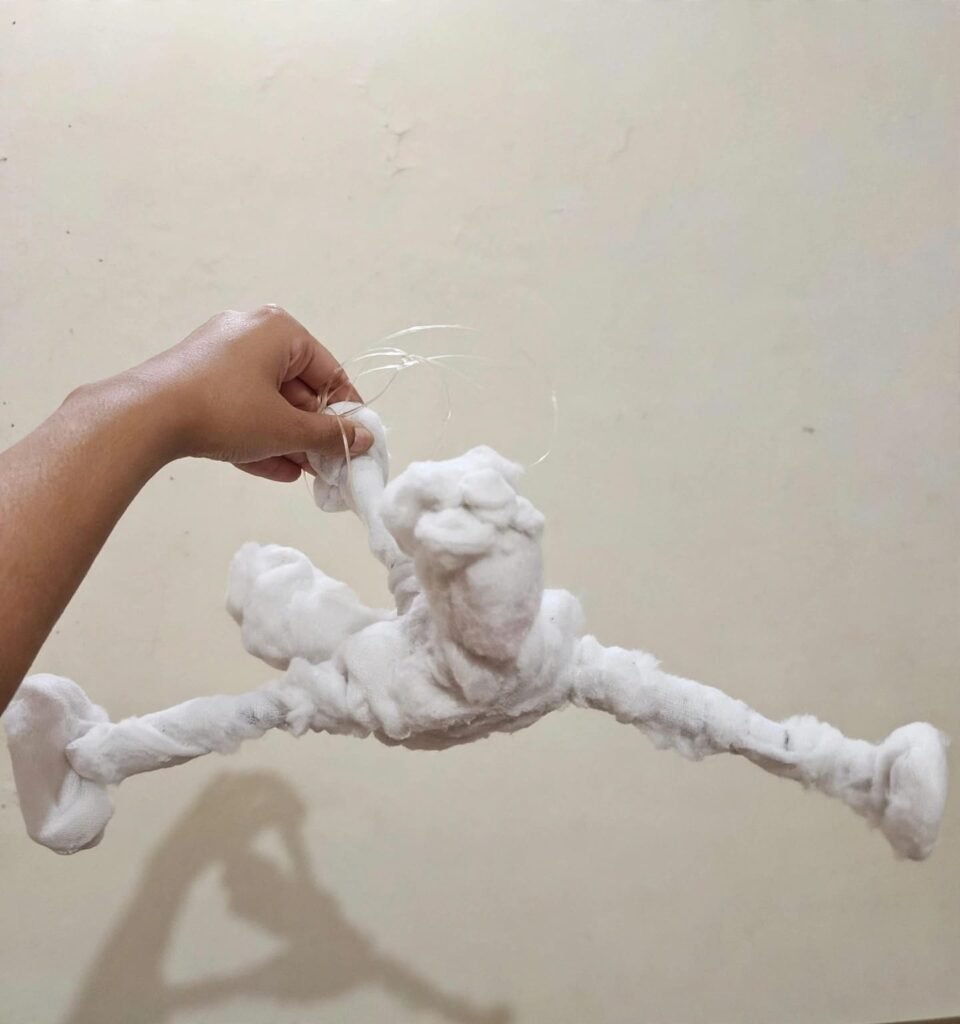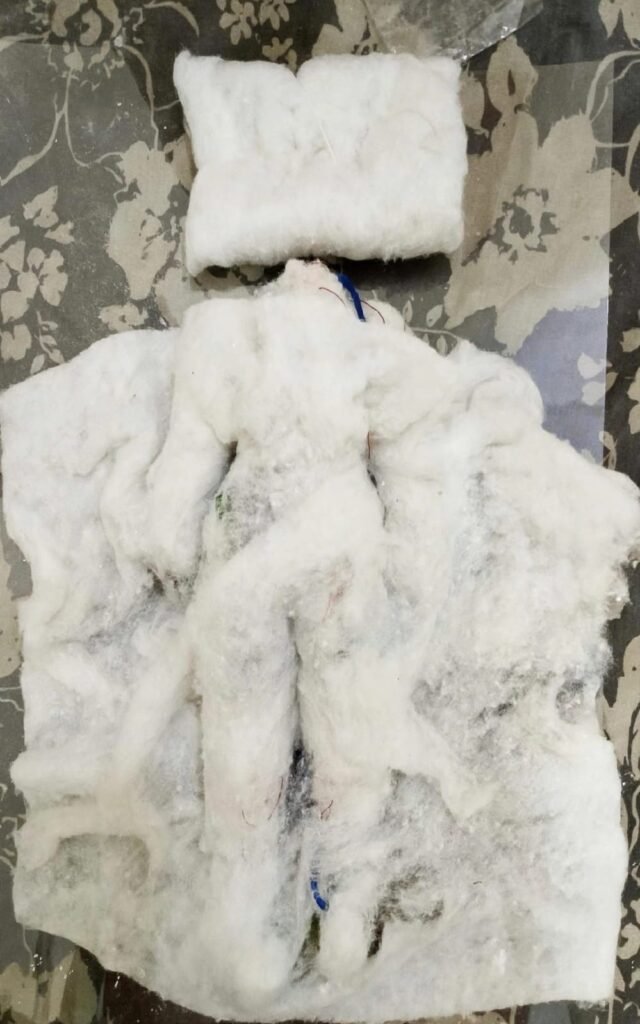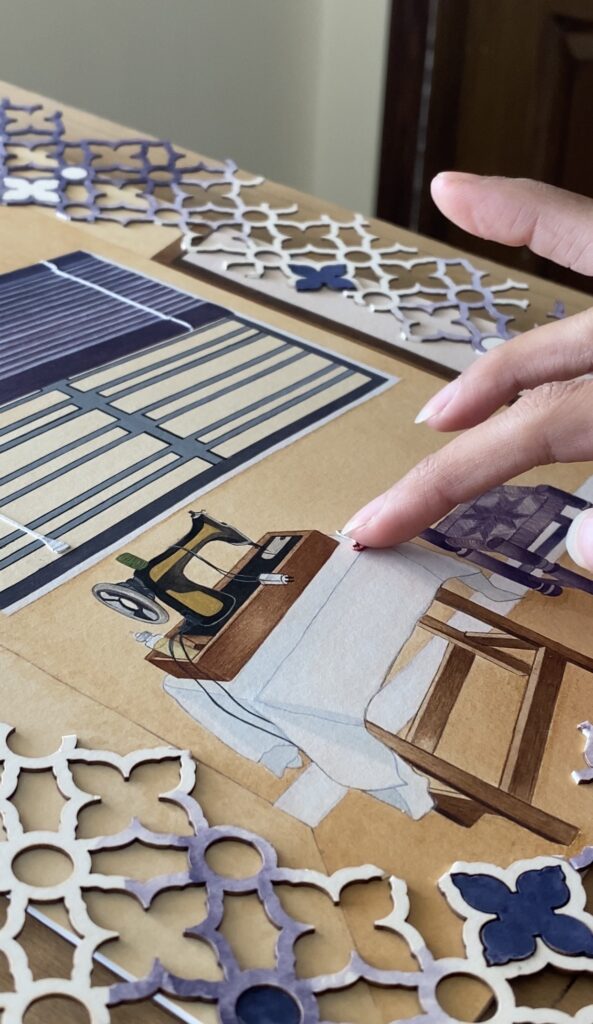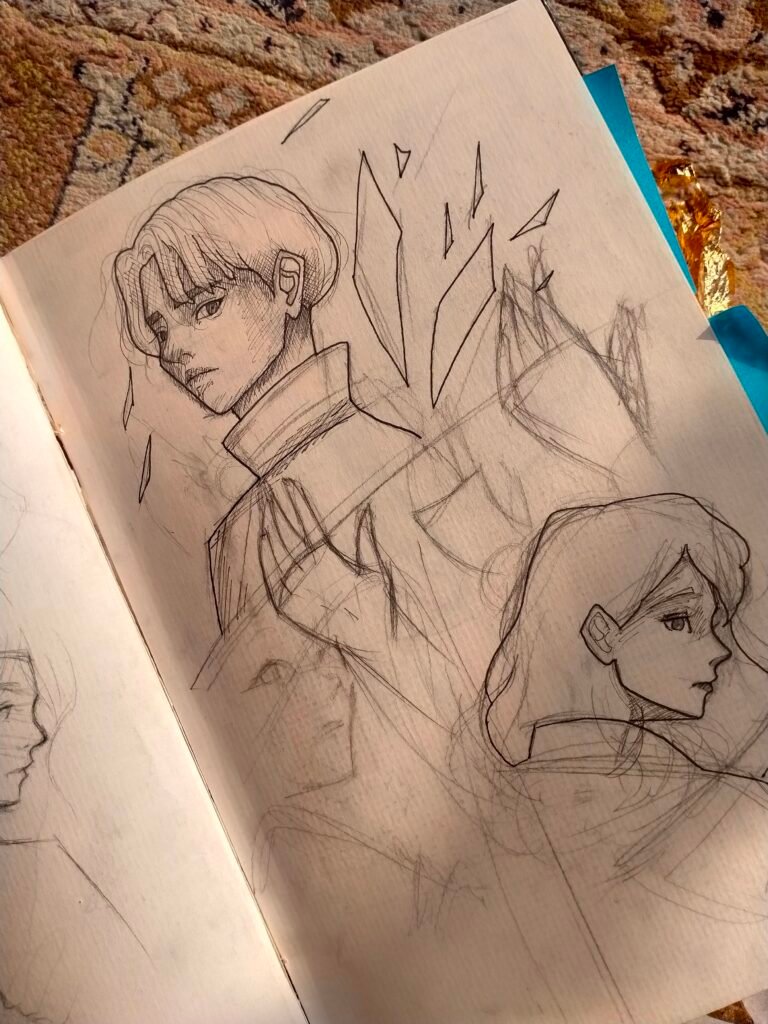
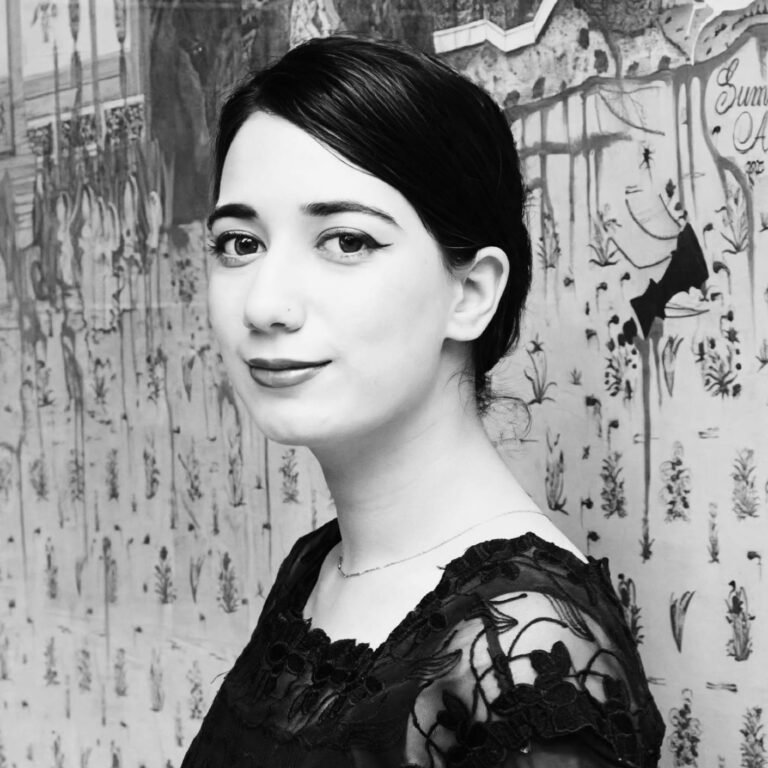
Feroza Amir is a Lahore-based visual artist working in painting and sculpture. She completed her FA in Fine Arts from Lahore College for Women University, a Professional Diploma in Painting, and a Bachelor’s degree in Sculpture from the Punjab University College of Art and Design. Her work has been exhibited at several exhibitions across Pakistan. Her practice centers on the human body, memory, and healing through soft sculptural forms made from cotton, stuffing, and thread. Inspired by women’s silent struggles, resilience, and emotional experiences, her series Strings of Hope explores healing as a continuous process rather than a final destination. She transforms cotton into both skin and bandage, while thread becomes a symbol of repair, resilience, and hope. Her work invites viewers to find strength, compassion, and connection within brokenness.
Notes on gender, healing, and vulnerability
I sit with the emotion, observe it, and allow it to develop into a visual thought. I ask myself what the feeling would look like if it had a body, a texture, or a weight.
What have been the biggest challenges for you building a career as a female artist, particularly working in sculpture?
One of the biggest challenges I have faced as a female artist has been establishing myself in a field like sculpture, which is often perceived as physically demanding and traditionally male-dominated. Working with materials, tools, and large-scale forms requires not only technical skills but also confidence and persistence. I have sometimes had to work harder to have my abilities and ideas taken seriously. Another challenge has been access to resources, studio space, materials, exhibitions, and financial support. Sculpture can be expensive and requires considerable space, making it difficult for emerging artists to sustain their practice independently. Despite these challenges, I have learned to turn limitations into strength. My use of cotton and thread allows me to challenge traditional ideas of sculpture by transforming soft, delicate materials into strong human forms.
For me, being a woman is not a limitation; it has shaped my sensitivity toward themes of healing, vulnerability, resilience, and human experience. My practice continues to assert that sculpture does not have to be monumental or rigid; it can also be intimate, fragile, and emotionally powerful.
Your work speaks to women’s silent struggles specifically. Do you feel a responsibility carrying that, or does it feel more personal than representative?
I see it as personal first, and representative second. My work begins with my own observations, emotions, and experiences of vulnerability, healing, and resilience. As a woman, I naturally connect with the silent struggles that many women experience but may not always have the space or language to express. I don’t feel that I have to speak for every woman. Instead, I create from a personal place and allow my experiences to open a wider conversation. When viewers recognize their own stories, pain, or strength in my work, it becomes something beyond my individual experience. For me, the responsibility is not to represent women in a single way, but to give visibility to emotions that are often kept invisible. Through cotton, thread, stitching, and fragile human forms, I transform silence into something tangible. My sculptures become a way of saying that vulnerability is not weakness it can also be a form of resilience and strength.
You mentioned how you don’t begin by thinking about a finished sculpture but rather by sitting with an emotion. What happens between feeling something and the first stitch? How does the form eventually take place?
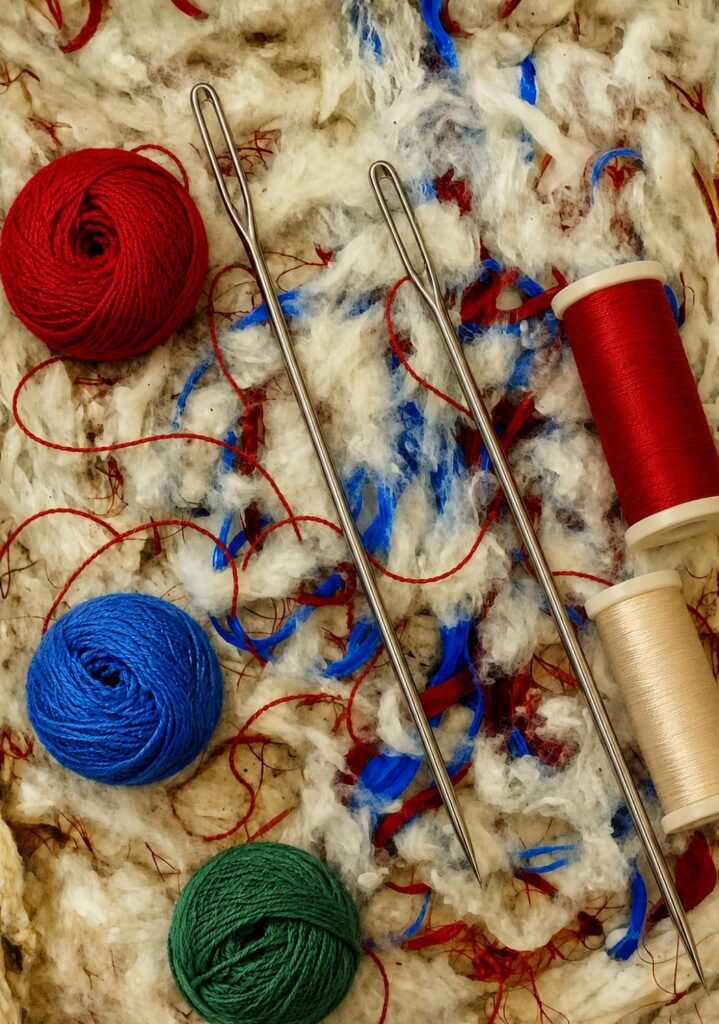
For me, there is a quiet period between feeling an emotion and making the first stitch. I usually don’t begin with a fixed image or a completed idea. I sit with the emotion, observe it, and allow it to develop into a visual thought. I ask myself what the feeling would look like if it had a body, a texture, or a weight. The first stitch often becomes the moment when that invisible feeling starts becoming physical. I work intuitively with cotton and thread, building, wrapping, stitching, pulling, and sometimes breaking the form apart again. The material itself guides me. Cotton has softness and vulnerability, while thread can hold, connect, restrain, or repair. The needle becomes almost like a tool for healing each stitch joining something that feels fragmented.The form gradually emerges through this process rather than being completely planned beforehand. A limb may appear, a body may begin to bend, or a wound may become a seam.
Sometimes the material resists what I initially imagined, and I allow that resistance to influence the sculpture. For me, this is where the emotional and physical processes meet. I don’t simply construct the figure; I discover it through the act of stitching. The final form carries traces of the time, tension, repetition, and emotion invested in every stitch.
You’ve said the sculptures aren’t just about healing; they’re part of your own healing process. But cotton is soft, and it’s also being pierced and sewn to hold its shape, so there’s almost pain built into the material alongside the resilience. How does healing actually enter that process?
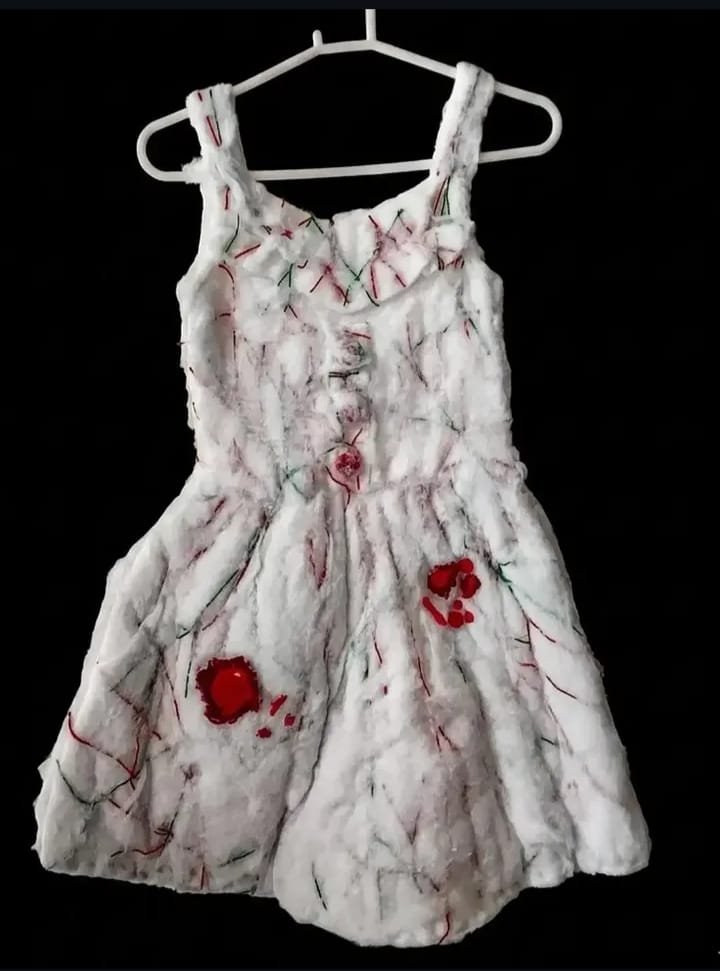
Healing enters my process through the contradiction between softness and pain. Cotton is naturally soft, fragile, and comforting, but when I pierce it with a needle, I introduce an element of pain. For me, this reflects the reality of healing: it is not always gentle or painless. Sometimes healing requires confronting wounds, memories, and emotions that we would rather avoid. Every stitch becomes a small act of repair. The needle pierces the material, but the thread follows it and holds the broken or scattered parts together. I see this as a metaphor for my own emotional process acknowledging pain rather than hiding it, and gradually finding ways to hold myself together. The form takes shape through repetition. Stitch after stitch, something fragile becomes stronger and more defined. The marks of the needle are not something I try to erase; they become part of the sculpture, just as our scars and difficult experiences become part of who we are. So, for me, healing does not mean returning to an untouched or perfect state. It means accepting what has happened and transforming it into something meaningful. Cotton carries the vulnerability, the needle carries the pain, and the thread carries the possibility of connection and repair. In that sense, every sculpture becomes both a record of something I have felt and an act of rebuilding. The wound is not hidden; the stitching becomes evidence that healing has taken place.
Is there a piece that changed something for you personally or even professionally, more than the others?
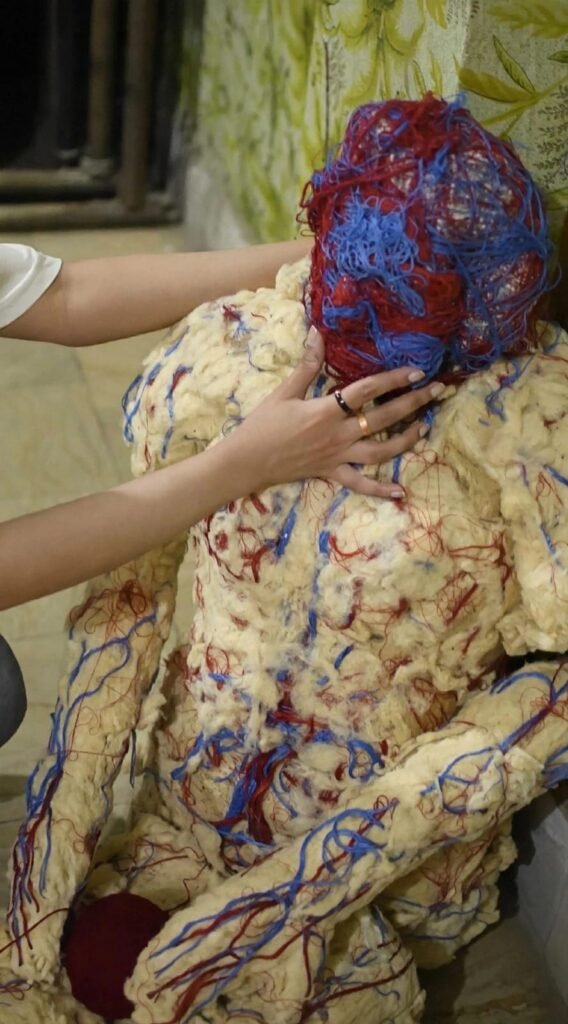
Yes, Strings of Hope, my bachelor’s thesis, changed me the most, personally and professionally. It was a life-size figurative installation made primarily with cotton, thread, needles, and other everyday materials. The work began from my interest in vulnerability, isolation, and healing, but while creating it, I realized that these themes were not only subjects I was exploring, they were also connected to my own emotional journey. Working with thread taught me patience. Each stitch required time and attention, and gradually I began to understand that healing also happens through small, repeated acts rather than one dramatic transformation.
Professionally, Strings of Hope helped me recognize that cotton and thread could become my own visual language. I had worked across different mediums, but this project gave me a stronger sense of identity as a sculptor. I discovered that materials traditionally associated with softness, domesticity, and femininity could be transformed into powerful, life-size sculptural forms. It also gave me the confidence to continue exploring the human figure through fiber and mixed media. The experience of exhibiting the work as my thesis made me realize that my sculptures could communicate personal emotions while still creating space for viewers to find their own stories within them. For me, Strings of Hope was not simply a graduation project. It became the point where my material, my subject, and my personal healing process came together.
Cotton and thread are far more fragile than traditional sculptural materials like stone, wood, or metal. How do you manage, store, or archive work that is delicate, especially long-term?
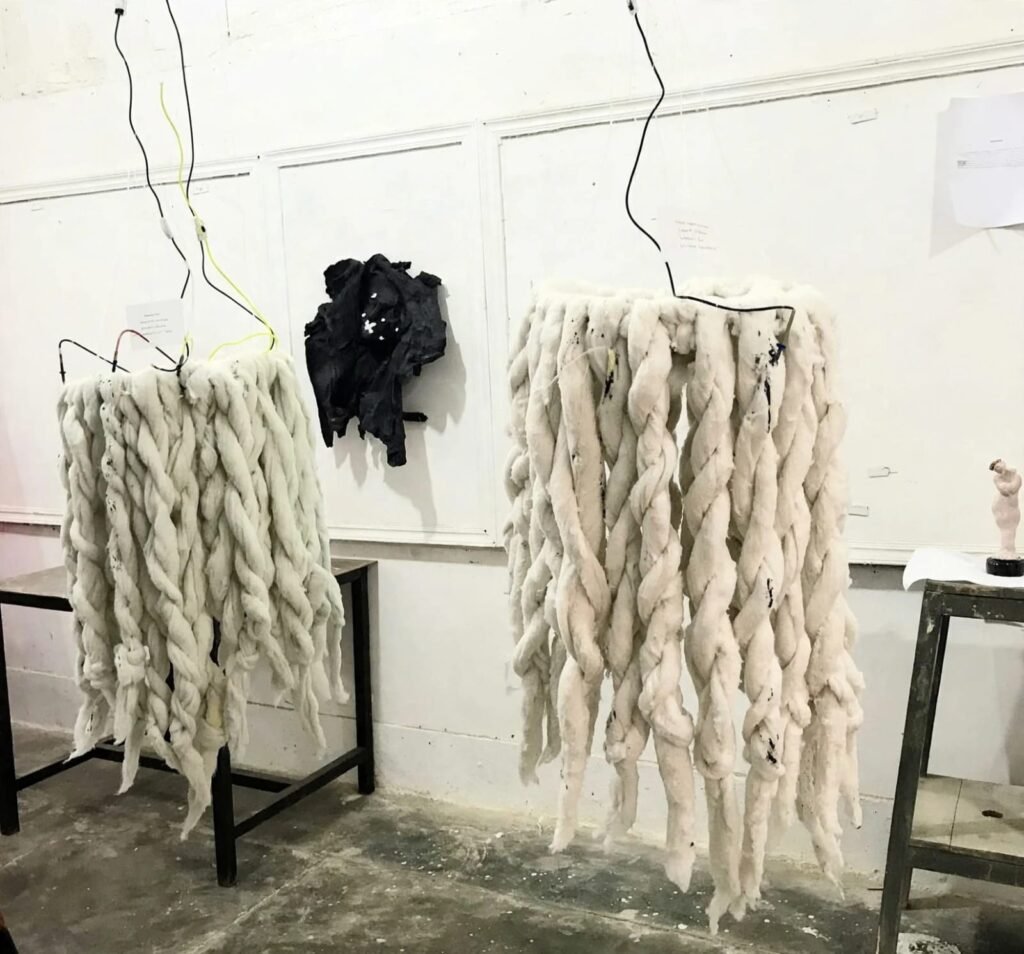
Working with cotton and thread requires a different approach from traditional sculpture. I store my sculptures carefully in a clean, dry, protected environment, away from direct sunlight, moisture, dust, and excessive handling. Because the forms can be delicate, I avoid placing pressure on them and use appropriate support when they need to be moved or displayed. For larger sculptures, I also think about how the work will be transported and how its structure can be supported without damaging the fiber.
Long-term preservation is something I am still learning about as my practice develops. I document each sculpture through detailed photographs, measurements, materials, and installation records so that its physical and conceptual history is preserved even as the material naturally changes. In a way, I accept that these works will never have the permanence of stone or metal. Their vulnerability is part of their meaning. Cotton can weaken, threads can loosen, and surfaces can change over time just as human bodies and memories change. For me, preservation is therefore not about freezing the sculpture in a perfect state. It is about caring for it while allowing its material character to remain visible. The fragility of the work reminds us that nothing human is completely permanent.
What does it take to keep a practice like yours going; not just creatively, but practically?
Keeping my practice going requires discipline, patience, financial planning, and a strong belief in the work. Creativity is only one part of being an artist; there is also the practical reality of purchasing materials, finding studio space, managing time, documenting work, applying for exhibitions and opportunities, and building professional relationships. Because sculpture requires more space and materials than painting, I have to be very conscious about how I use resources. I often work with accessible materials such as cotton and thread, but even these require time and careful preparation. I have learned to work within limitations rather than allowing them to stop me.
Time management is also important. There are periods when I have to balance artistic production with professional and personal responsibilities. I try to maintain a regular connection with my practice, even when I cannot work on a large sculpture every day.
Most importantly, I think sustaining an art practice requires consistency. Not every project leads to an exhibition or opportunity, and not every day feels productive. I have learned to continue experimenting, documenting, applying, and creating regardless of immediate results.For me, sustaining an artistic practice means treating art not simply as something I love, but as a long-term commitment. I want to keep developing my language, experimenting with materials, and creating work that remains emotionally honest while gradually building a sustainable professional career.
What role does making art play in your life day to day?
Art is deeply connected to my everyday life. It is not something I switch on only when I enter the studio; it has become a way of observing, thinking, and understanding the world around me.I notice small details like people’s gestures, expressions, silence, relationships, textures, and changes in nature. These observations often become the starting point for my work. Even when I am not physically making art, I am constantly collecting images, emotions, and ideas.
Making art also gives me a space to process emotions that are difficult to express verbally. When I work with cotton, thread, or paint, I can transform an internal feeling into something visible and tangible. The repetitive process of stitching, shaping, or painting can be calming and allows me to slow down and reflect. At the same time, art gives me a sense of purpose. It allows me to question things, experiment, make mistakes, and discover something unexpected. For me, making art is both a form of expression and a way of living. It helps me understand myself, connect with others, and turn personal experiences into something that can communicate beyond words.
“I make art from what is difficult to say. Through thread, cotton, and needles I stitch wounds into stories. Turning fragility into strength, silence into expression, and pain into hope.
For me, every stitch is a reminder that healing is not becoming untouched, it is learning to hold ourselves together.”