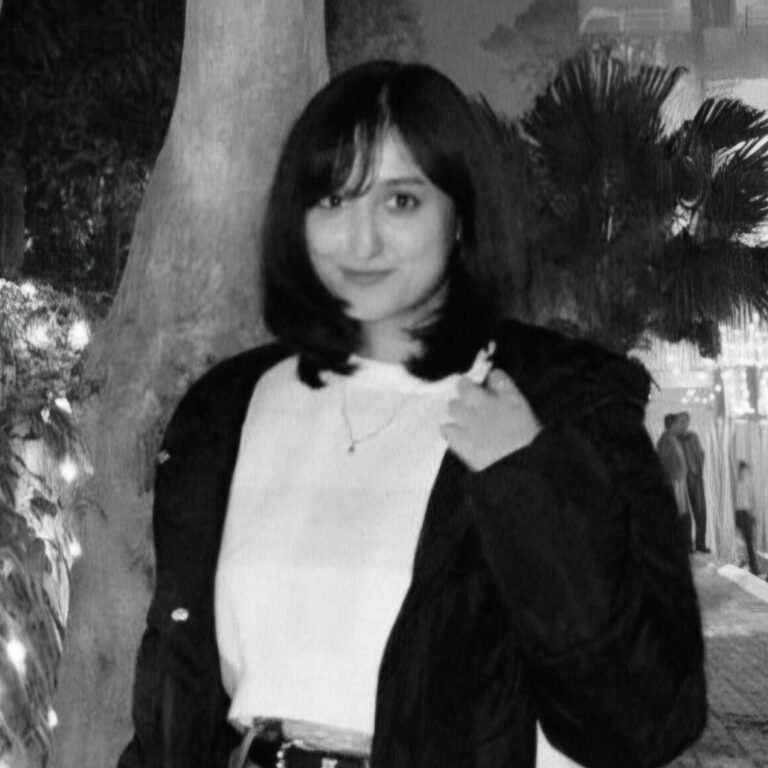
Rafia Baig is a visual artist based in Rawalpindi, Pakistan, with a background in traditional painting. Her work explores the cycles of life through the phases of the moon, reflecting the passage of light and dark times as part of growth.
Notes on objects, symbols, & change
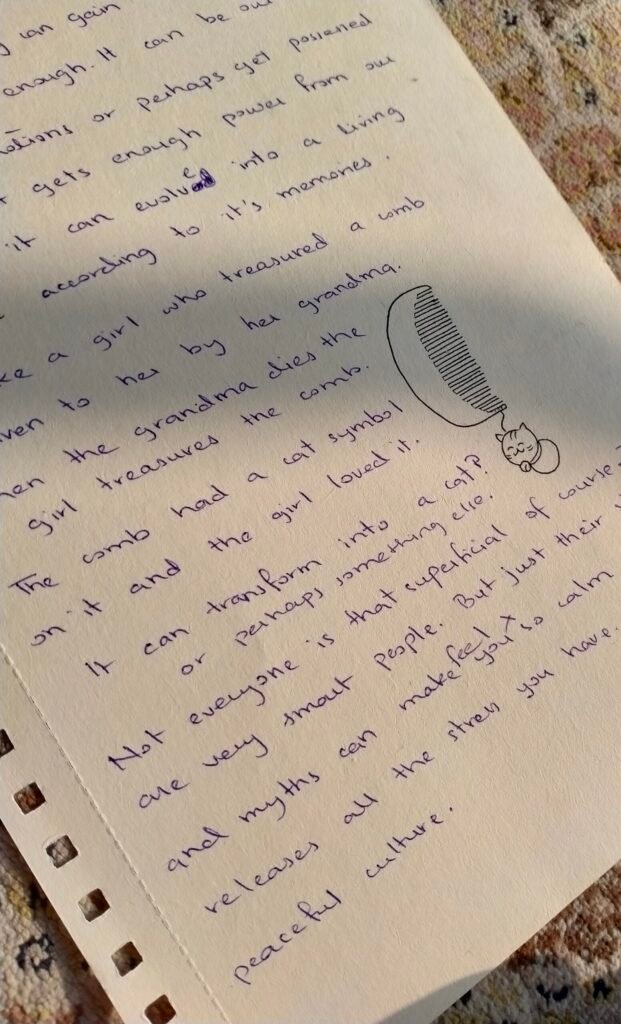
A painting can hold the artist’s memories and emotions. After getting a new owner, it will hold the memories of them, forming an identity of its own — a soul.
What does your usual studio routine look like at the moment?
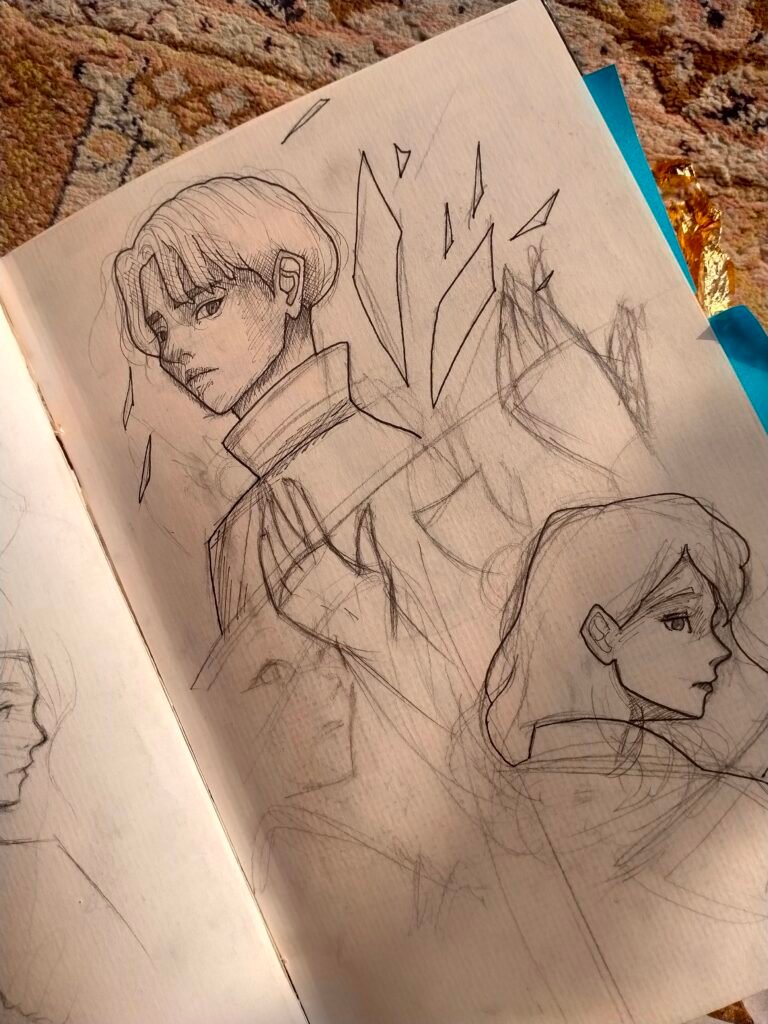
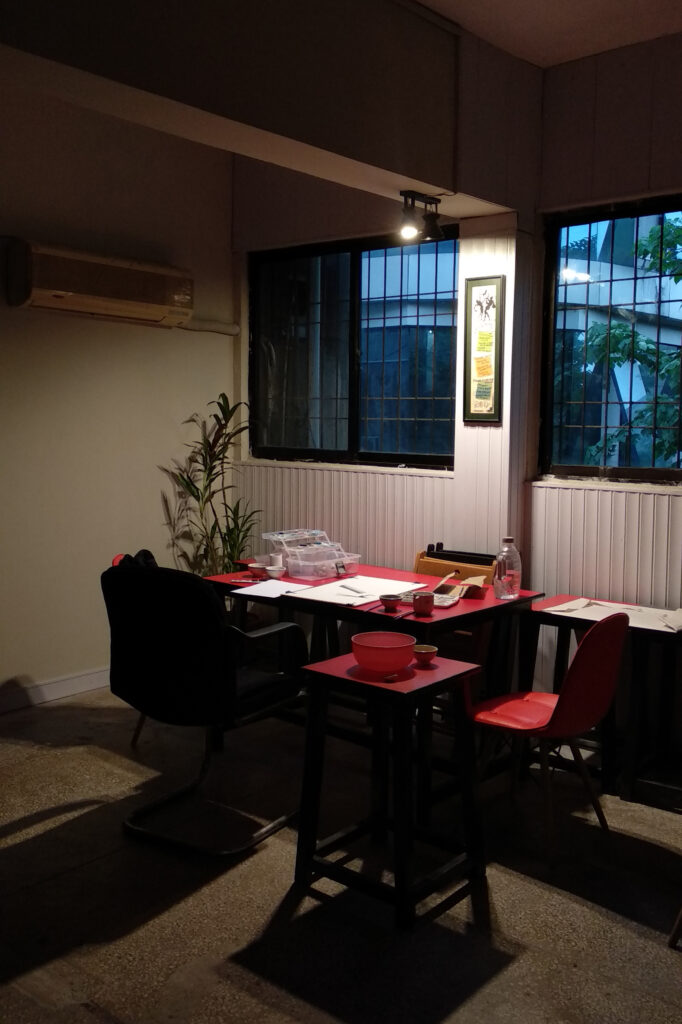
Well, recently I was working a lot of hours for an upcoming exhibition. I would get up, have coffee and think about the work I have to do the following day. But without feeling pressured so I would be looking forward to it, and then after a light breakfast I would start working. That’s how I usually work for exhibitions, but in my normal routine, I am mostly thinking of new compositions and ideas and writing and drawing them in my sketchbook. These days, since I just got free from a deadline, I have started sketching up new ideas for another upcoming exhibition. Currently thinking of three paintings for it. The previous exhibition really made me look forward to my upcoming work, so I am excited.
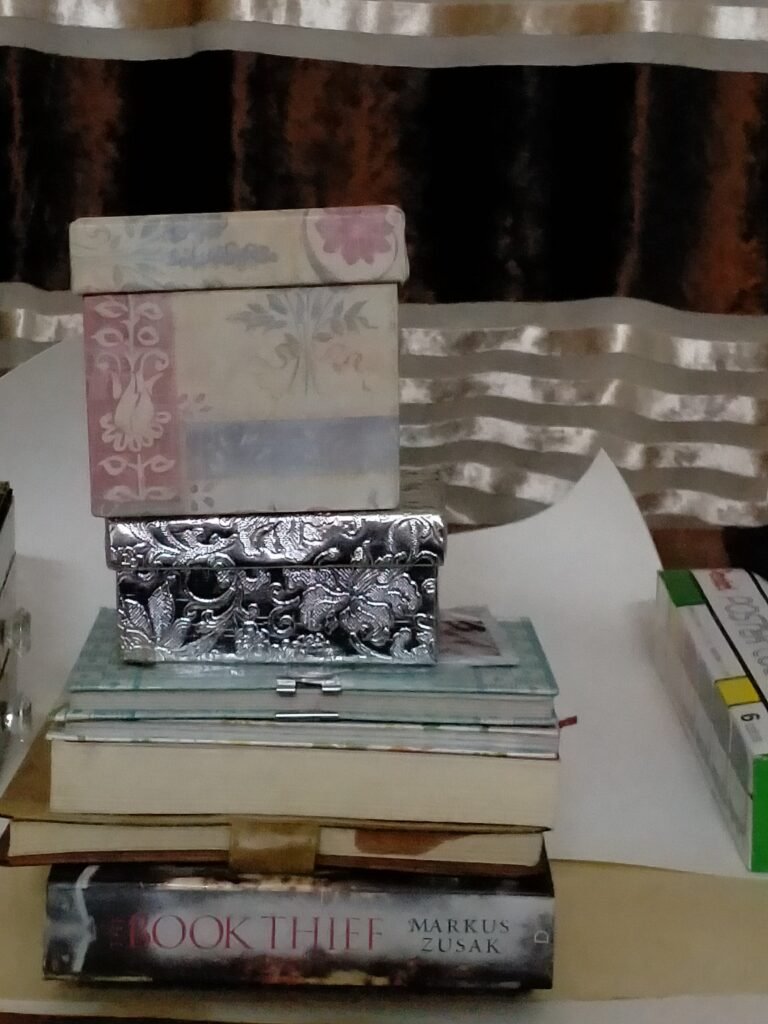
You’ve spoken about objects carrying a kind of energy or presence, does this belief shape how you place, keep, or live with objects in your workspace?
I have never thought deeply about this, but that’s right. I like collecting objects I find pretty and placing them in my space. I am not really an avid collector. I purchase sometimes, but when I do, I hold them precious. A painting, as well, can hold the artist’s memories and emotions. After getting a new owner, it will hold the memories of them forming an identity of its own — a soul.
The soul itself can be good, or it can be bad, depending on what it was fed. I find it very fascinating.
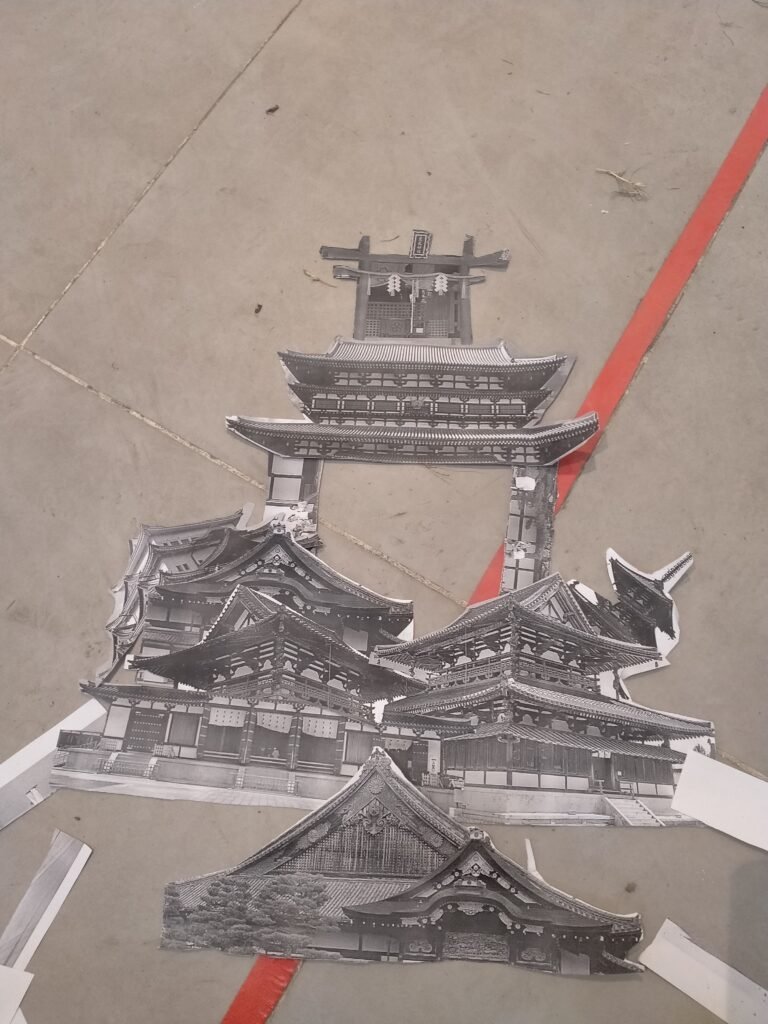
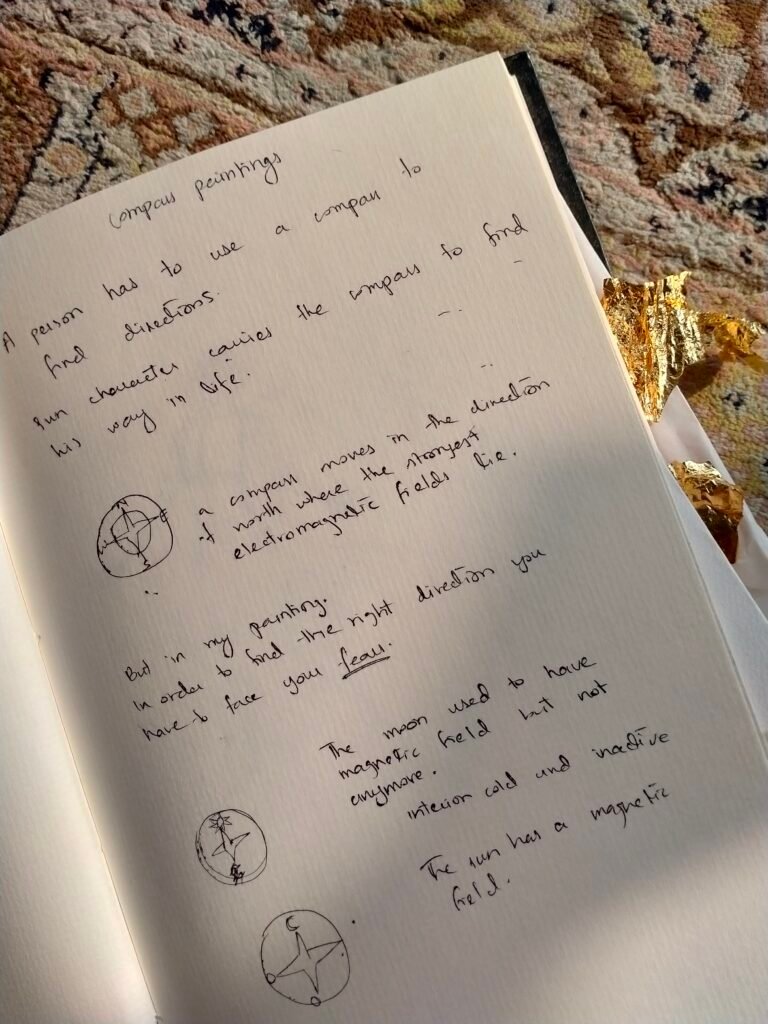
When I began developing my concept, I took my belongings and tried to identify similarities among them to create a concept. I have some sketches for that as well, which I can share. I tried to create compositions, and that kind of led me to the scrolls. I noticed that each object represented something; it created a story if you tried to decipher the meaning behind them. Japan has a lot of such meanings, for example, there is a term called utakata, which means foam on water, which implies something that exists temporarily and is fragile. And that’s where using symbolism in my work came from. Simple objects can be holding something deeper and bigger than we might think. Reading them is fun, and trying to figure out what they might mean is exciting for me.
When developing a composition, do you follow a set process, or is it more intuitive? Could you walk us through that decision-making?
This will be fun to answer. I usually take one object, for example its a tree, or a figure, something that the painting is going to focus more on. I place them where I wanna place them. Usually, my compositions are central, but it’s something I wanna break in my future works. So a big tree is in the middle of the composition, and afterwards, I start drawing the tiny things where I think I should place them. Like lanterns, fireflies, and I fill the spaces up. Then I look at the negative spaces and think of something that should be there, and that’s how my compositions come to fruition. Drawing and composition are the first step so it really needs to be clear for me to start my painting, so this process takes me the longest. Because if I am not satisfied with this part, I am not gonna be excited to paint it.
As an artist trained in Indo-Persian miniature painting, how do you navigate your interest in Japanese art? What feels familiar, and what feels different in that encounter?
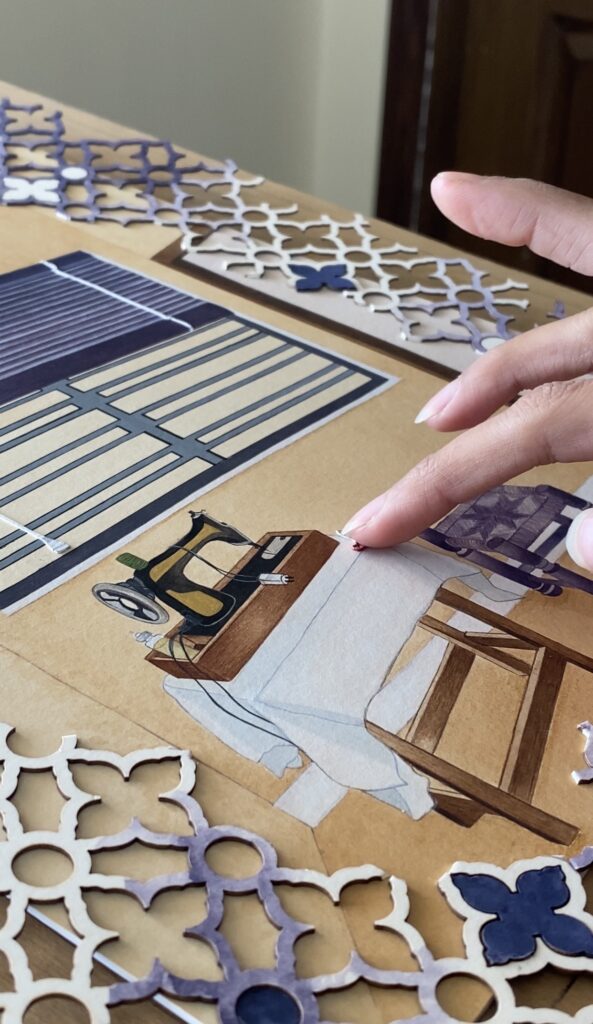
Oh, when I first saw Miniature Paintings, mainly Persian, it was very similar to Japanese paintings. I found it very surprising. For one, both Persian miniature painting and Japanese art were influenced by Chinese art through centuries of cultural exchange. There are many similar things in both art styles, like the usage of mythical creatures, similar cloud patterns and landscapes. Of course, I do realise that the techniques, mediums and the process of painting are very different, like the papers, the brushes, and pigments. I someday want to learn the other traditional techniques because I really want to be able to understand the differences between them. But look-wise, they are very similar, and that made me eager to pursue Miniature Painting. It took a lot of patience to understand and learn the proper techniques, but it was worth it.
How do you navigate moments of doubt, interruption, or setback in your creative process?
I pull back a little bit, take a breather and then look at the work again from afar. Once I start looking at it from a distance, I start craving it again. During such times, I also have to do my best not to overwork, or I will get burnt out. It’s the kind of time when I really have to take care of myself and my work, so I can keep working on it with love. However, it’s also something that I’ve come to understand and know how to handle. At this point, it’s not a big issue. You just have to understand that it’s normal and it happens, and you’ll get back to it.
Is there a work, image, or metaphor that feels meaningful to you but hasn’t yet found a place in your practice?
Yes lots! More than images or metaphors they are concepts, and of course they are Japanese.
There is a term called Hanaikada, which means cherry blossoms floating on the river, and it means life drifting downstream. Another one of my favourites is Komorebi, which means sunlight passing through leaves, and it means that hope exists, even in darkness. And there are so many more! I am still waiting to incorporate them into my work. There are so many areas I wanna touch and expand in my practice. Techniques I wanna use, by blending them with other traditional techniques.
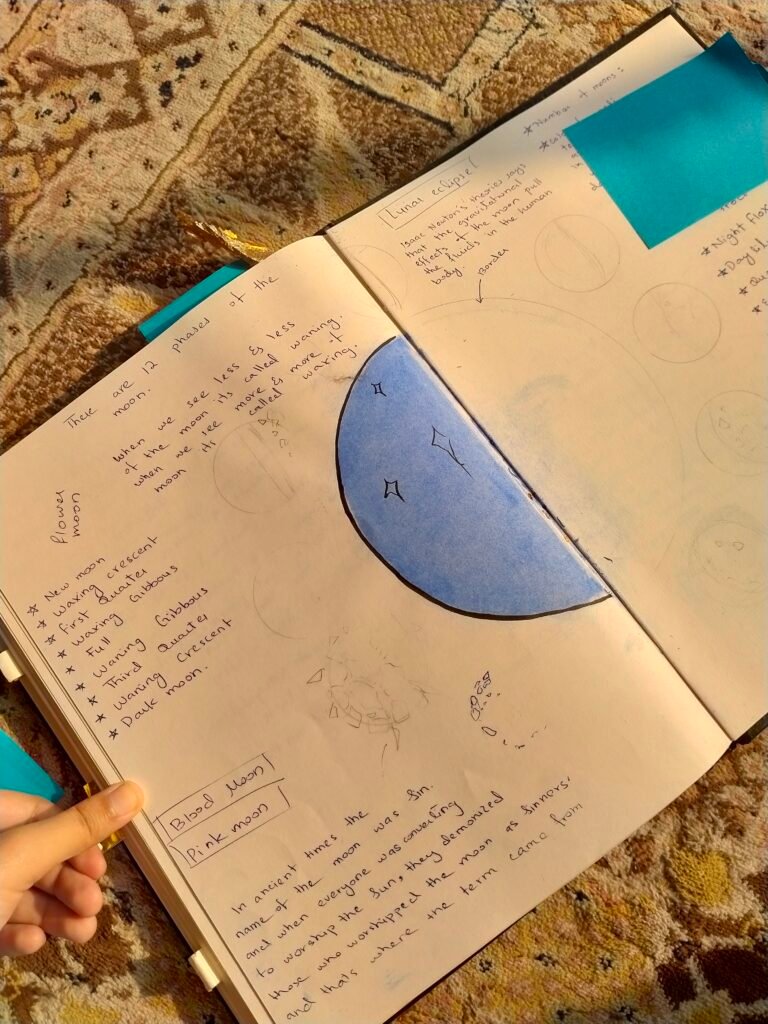
Your work engages with cycles of life through the moon — how does this idea of cycles relate to your practice and your life as an artist?
I think it relates to everybody’s life, really. I show that ups and downs come and go through the phases. The term phases of life even came from the phases of the moon. There is waxing and then the waning, then there is no moon, and then re-life happens and the moon starts waxing and becomes full. It’s like how you might think that the glass is half full or half empty. Some people only look at the downside and forget that good phases are coming as well. The waxing and waning concept came forth in my work during COVID. And I felt people really need to see the waxing part of life. Even if you go down, you’re gonna come back up. At first, when I started doing this concept, it had less to do with depth and more to do with a simple pathway, really. It was like, okay, you are young right now, so you might feel like you are a lesser self, like a crescent moon, but as you grow more, you become fuller, to the point where you become full. But then, yes, the moon starts waning, this part came to me after I thought hm.. It was like, it’s not just full, and that’s it, it’s a cycle. And I had to face the truth. And then I did, and it made sense.
You’ve spoken about objects having a kind of soul and noticing life in everyday details — is there an object people usually overlook that you feel carries a strong presence or ‘spirit’ for you?
It can be anything. It can be a cup, it can be a spoon, it can be the wind, a leaf, a bug, or mud. People overlook a lot of things. A cup can be empty or full, depending on how you look at it. The wind brings change, messages. A leaf can mean surrender as it falls, ageing, or life if it’s green. Mud can mean death and rebirth. Depends on how you wanna look at them.