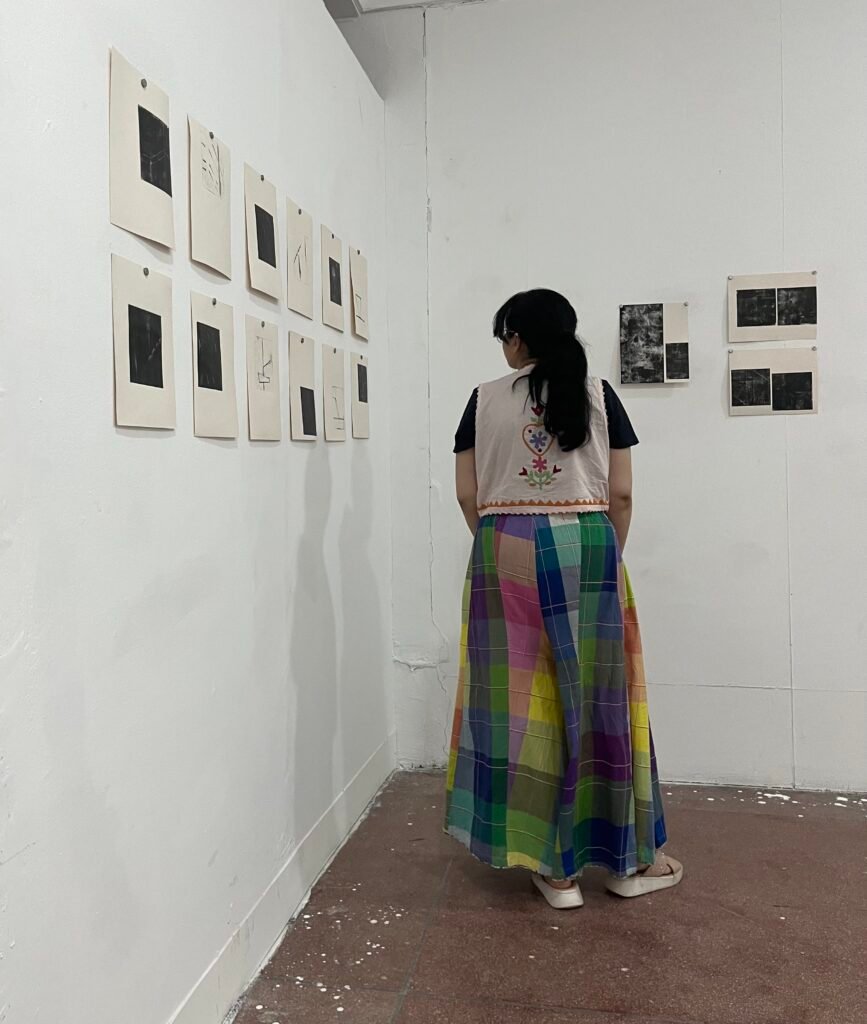
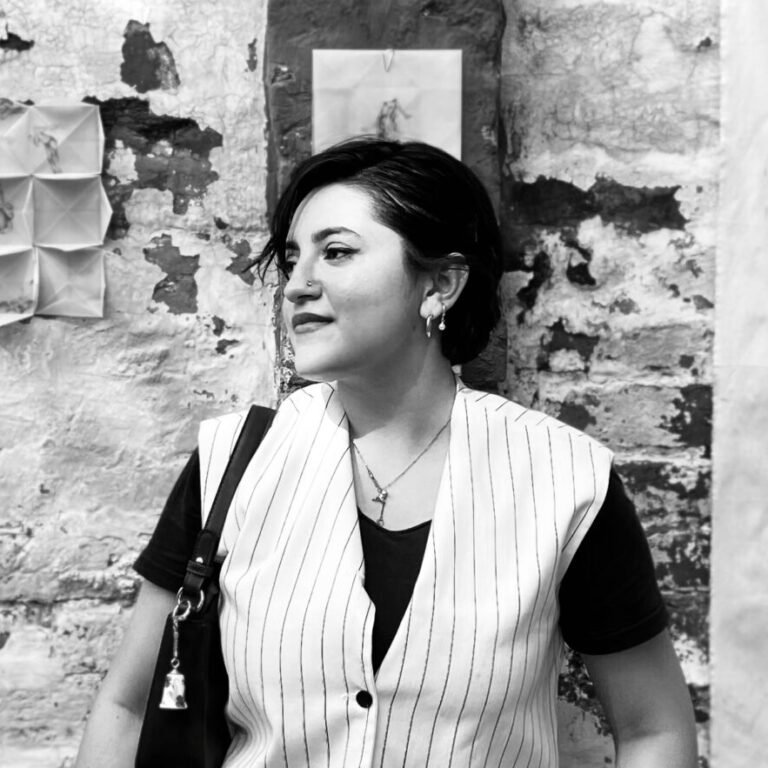
Minahil Khan (b. 2000) is a Lahore-based visual artist working across printmaking, painting, digital media, and light-based structures. She graduated in Fine Arts from Institute for Art and Culture in 2024 and is currently pursuing a Master’s in Art & Design Studies at Beaconhouse National University. Her practice explores intimacy through human connection, examining closeness, discomfort, vulnerability, and emotional boundaries through layered materials and spatial relationships.
notes on controlling, & letting go
I am less interested now in naming things directly. What remains important is the sense of something that is present but never fully held.
What does a typical day in the studio look like for you?
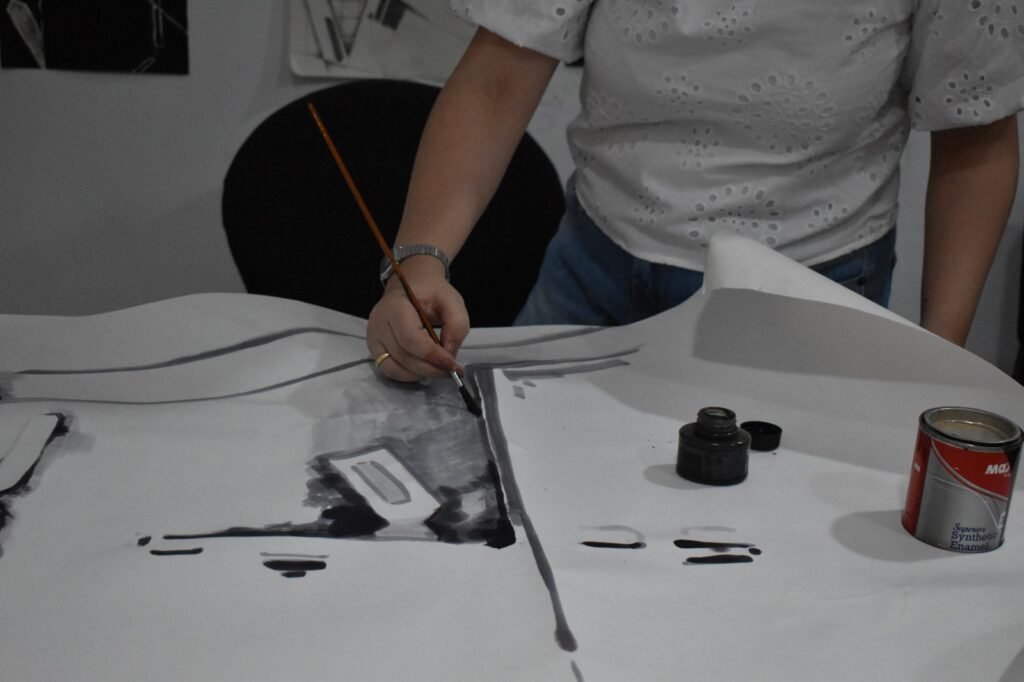
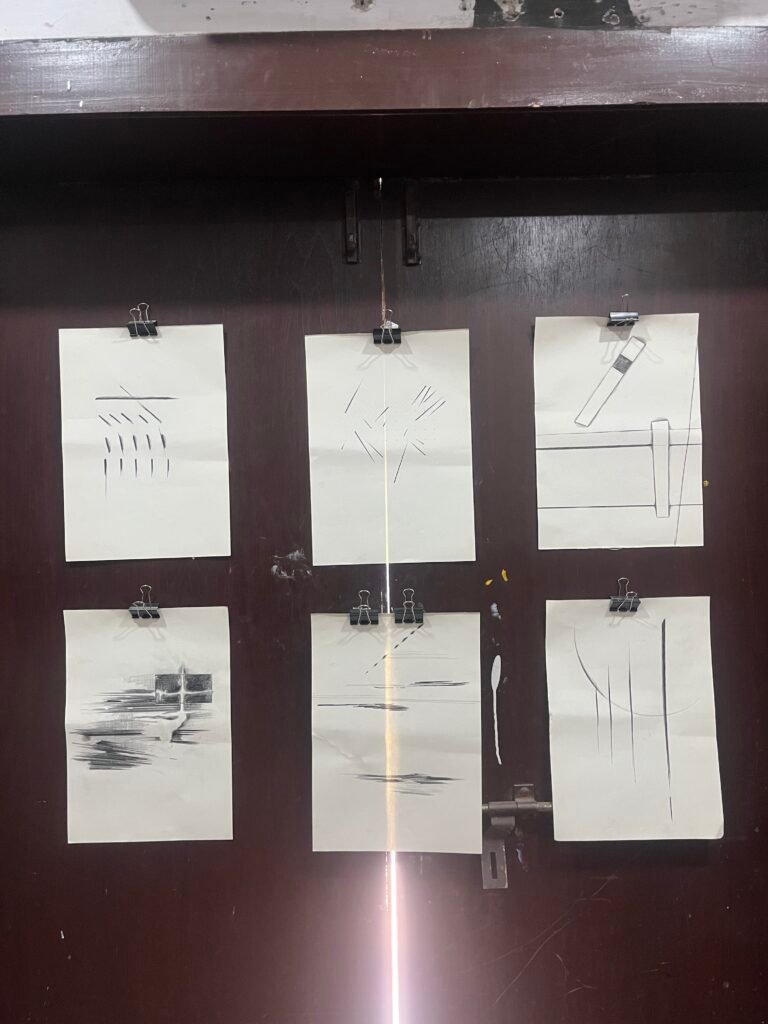
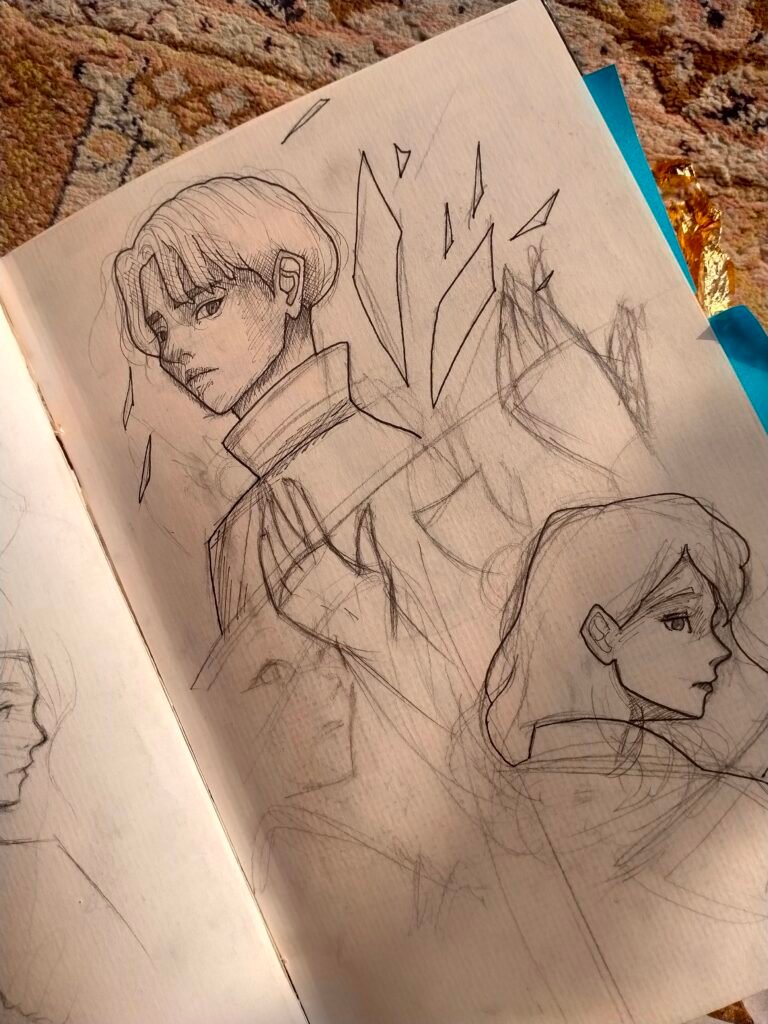
A cup of tea to start with, then I begin with small sketches. I move onto working on smaller prototypes, experimenting with materials that are around me. My process is very open; I shift between making, observing, and capturing photographs, letting things unfold rather than planning them fully in advance.
You’ve been practicing for nearly a decade, moving through O and A Levels, a BFA, and now a Master’s at BNU. How has the way you think about your own work changed over time?
Earlier, I was searching for resolution in my work, for something that felt complete. Now I am more interested in what remains unresolved. The work no longer feels like something I construct toward an end, but something I enter into. It unfolds slowly, through response rather than decision.
Most artists work with materials they can hold and control. You seem drawn to light precisely because you can’t. How do you work around something like that?
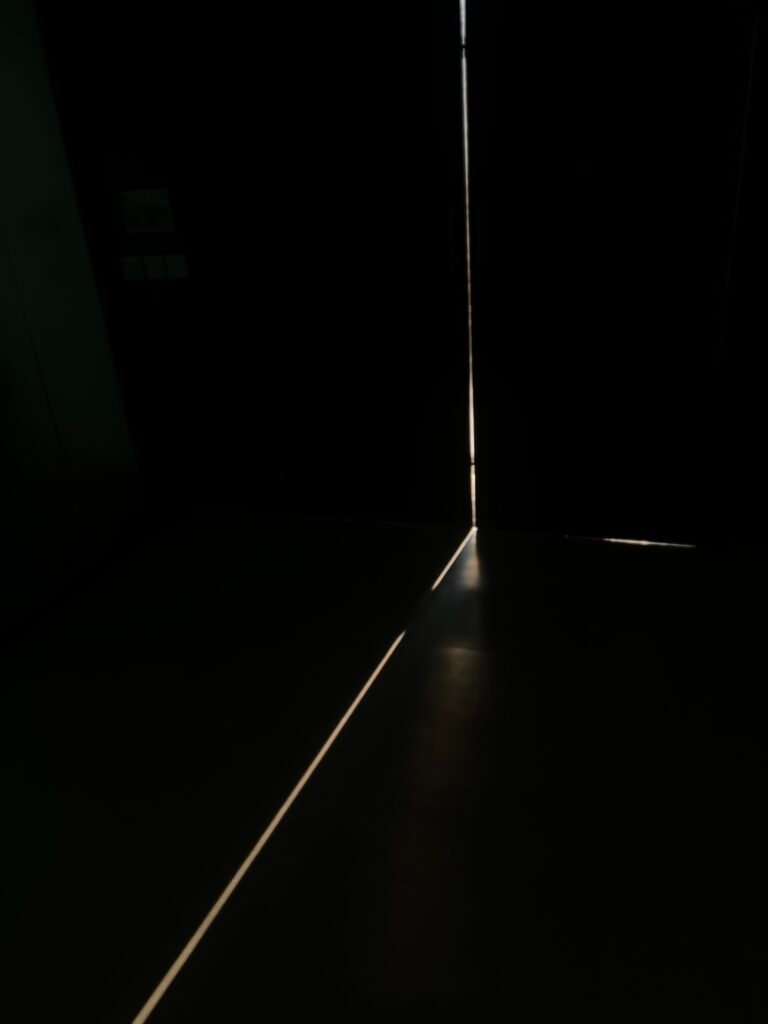
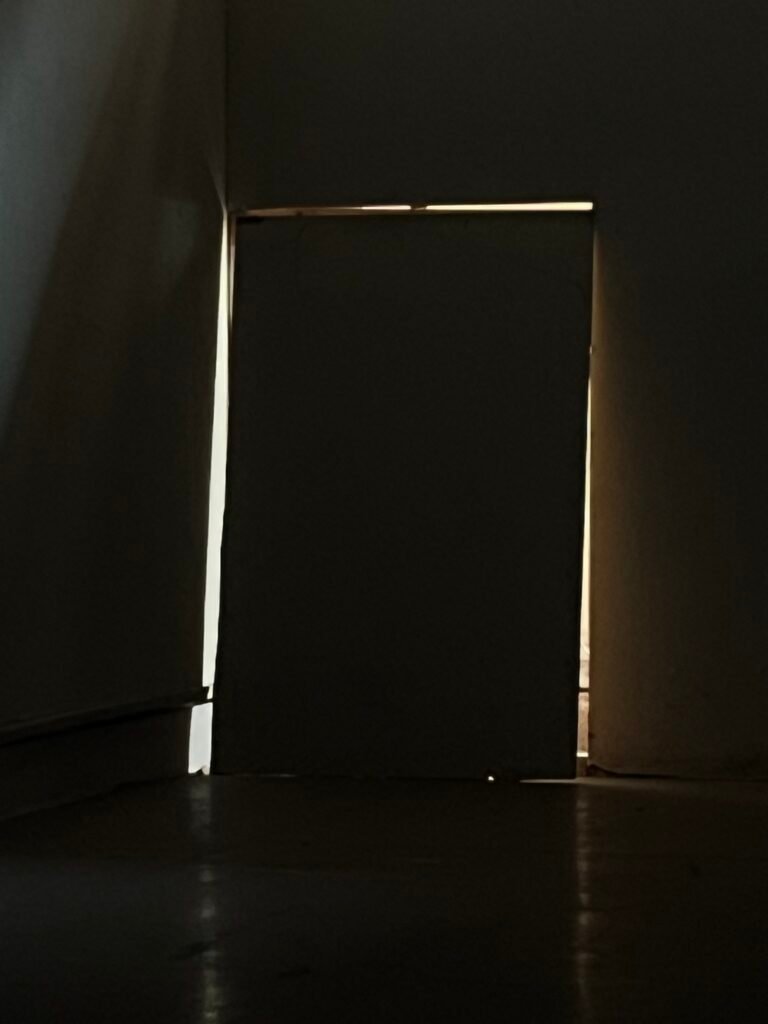
I observe how it exists naturally through slits, and I document its unpredictability. I don’t try to contain light; I make space for it. Through slits, layers, and interruptions in the surface, it slips in, breaks apart, and disappears again. In this way, it does not fully exist here or there. I think of my work as setting conditions rather than controlling outcomes, allowing light to behave like something transient, shifting, and never fully held.
When you introduce a new material into your practice; tracing paper, fabric, a new print process — what usually draws you to it?
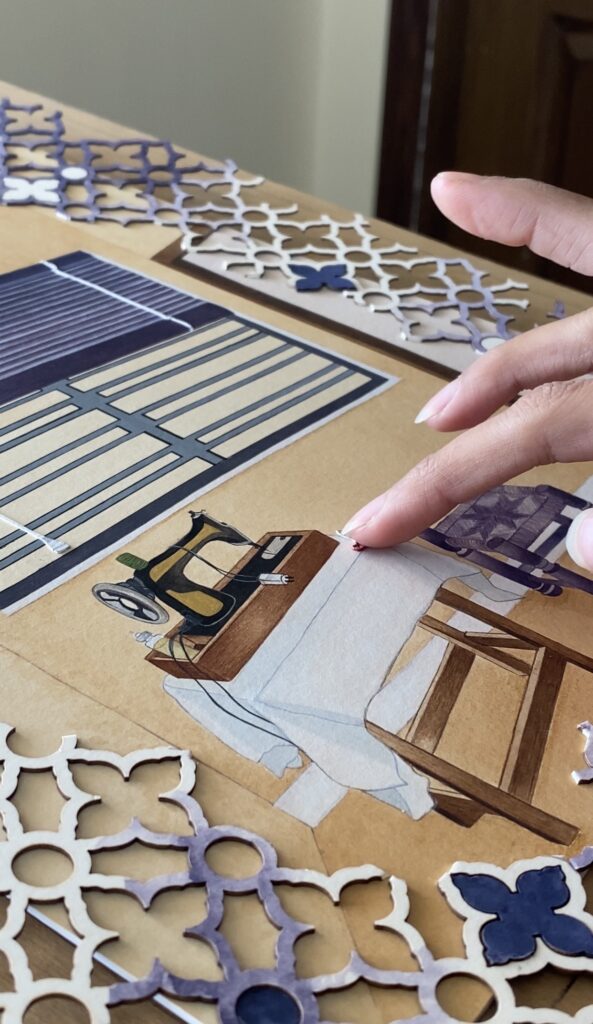
The opacity or feel of the material. I am drawn to materials that feel or look ethereal, those that change when light passes through them or settles on them differently. Often it is not a decision, but a pull toward how a material reacts.
The first thing that I noticed about your work was the continuous presence of blue across different mediums and series. What does that colour hold for you?
Blue was a starting journey for me as a painter. I’ve been unconsciously drawn to the colour, almost as if it stayed with me over time rather than being chosen repeatedly in a conscious way.
Your practice has long explored intimacy, vulnerability, and emotional closeness but lately your focus seems to have shifted toward light and impermanence. How do these two connect at this stage of your work?
I am less interested now in naming things directly. What remains important is the sense of something that is present but never fully held. Light does this—it arrives and withdraws at the same time. That in-between state is where the work now exists.
Printmaking is one of those mediums that has a personality of its own. Till what moment do you try to control or manipulate it, or decide when to let go?
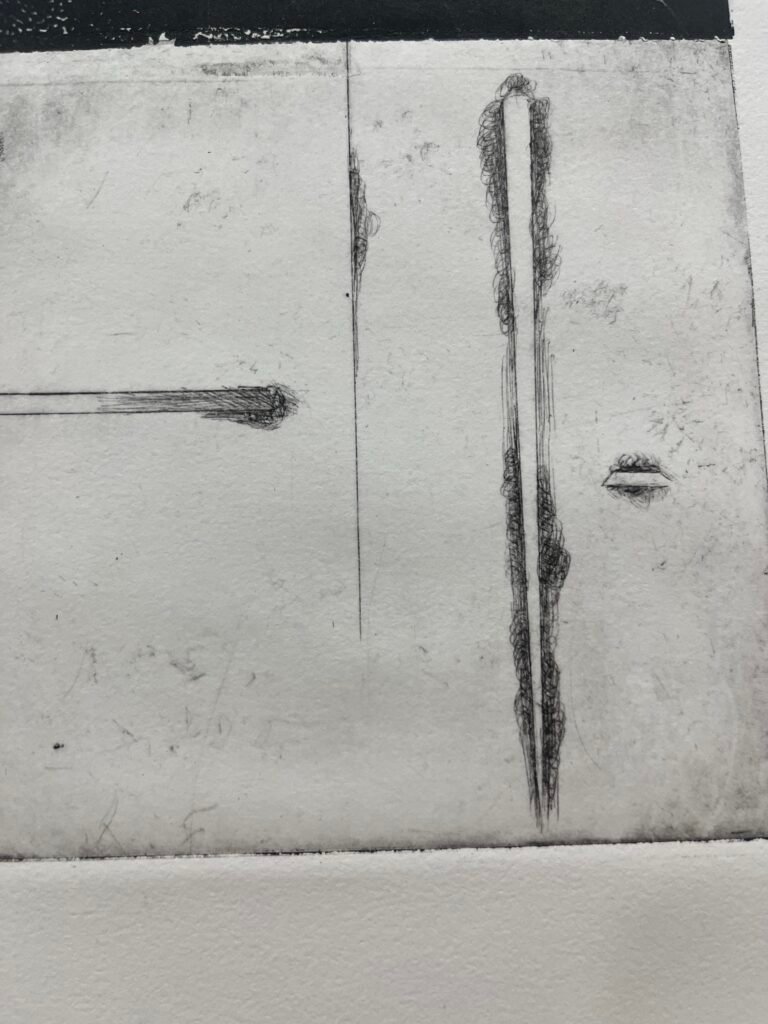
I control the imagery of the etching or the visual, but the outcome is often taken by the element of surprise, which I allow to happen as it is the nature of the technique. Control is only the beginning. I guide the first gestures, but then the work quickly moves beyond intention.
You’re teaching while simultaneously being a student and a practicing artist. Does moving between those roles change how you see your own work?
Yes, teaching takes me back to the basics. My own process is intuitive, but teaching forces clarity and structure. Moving between the two keeps me grounded while still allowing the work to remain open and experimental.
What does your practice need from you right now that you haven’t fully given it?
Definitely fewer cups of tea to start off and more immediate studio time. I tend to linger in the beginning of the process, but I think the work needs me to trust momentum a little more—less waiting for the “right” moment and more simply beginning.