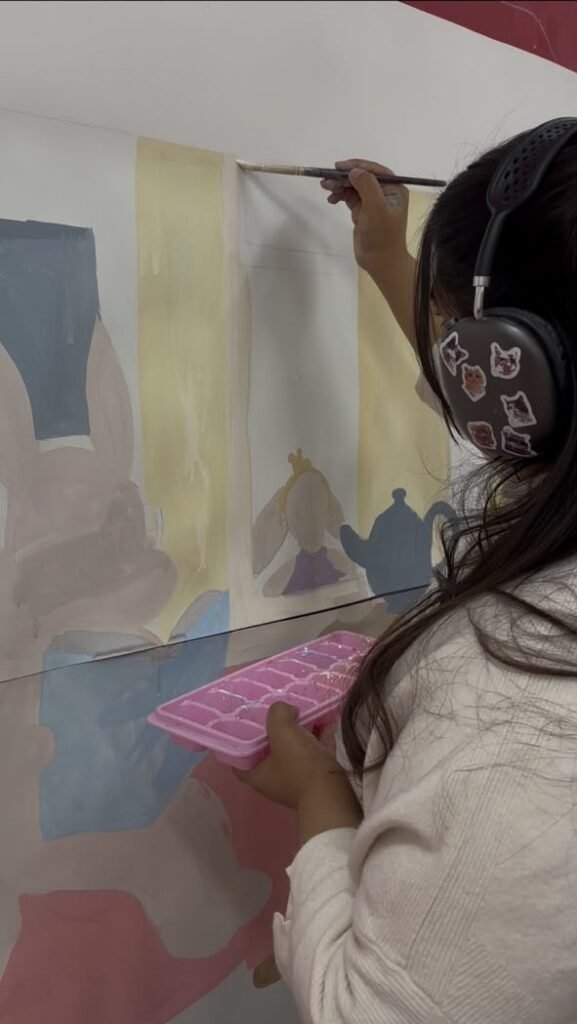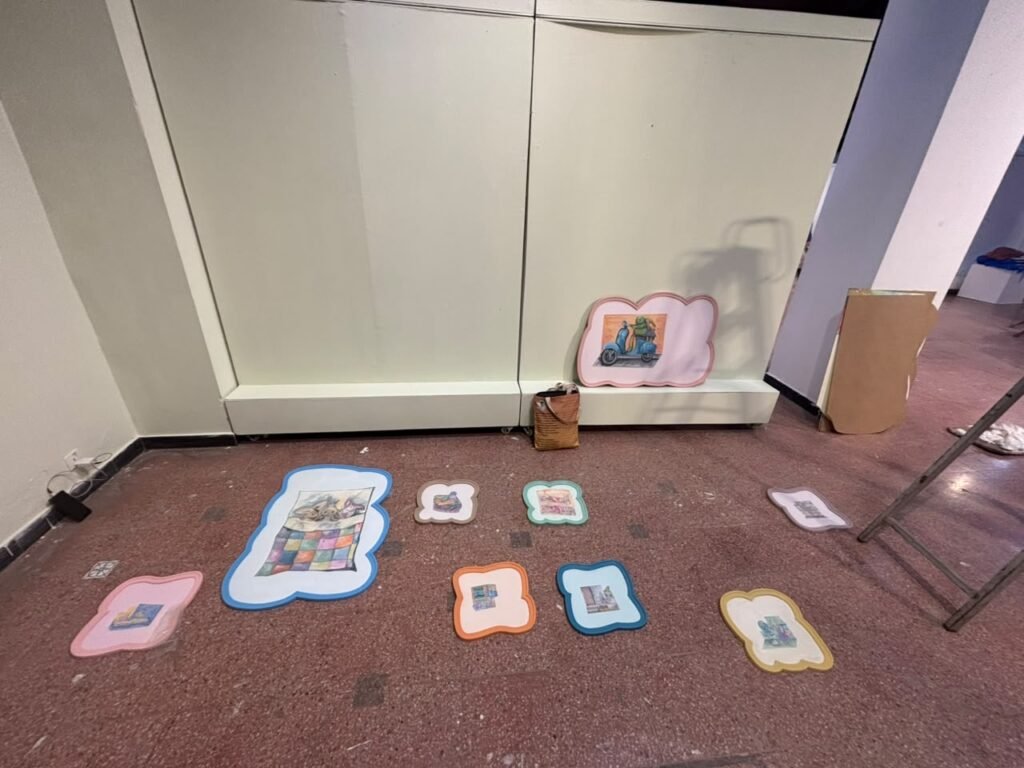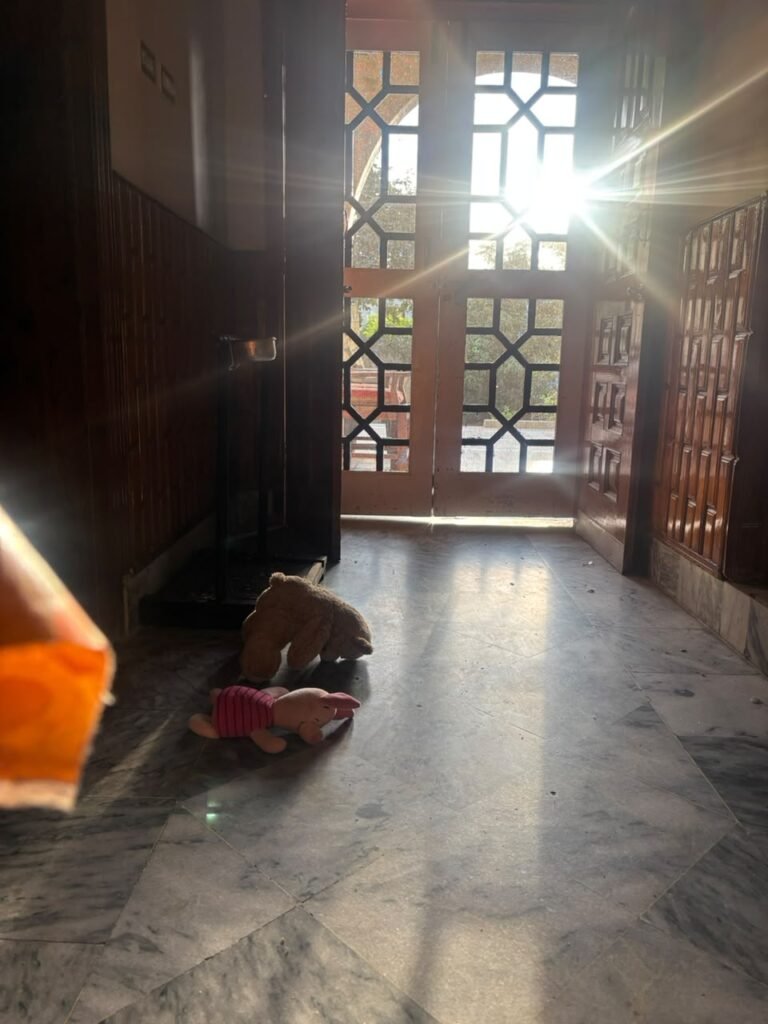
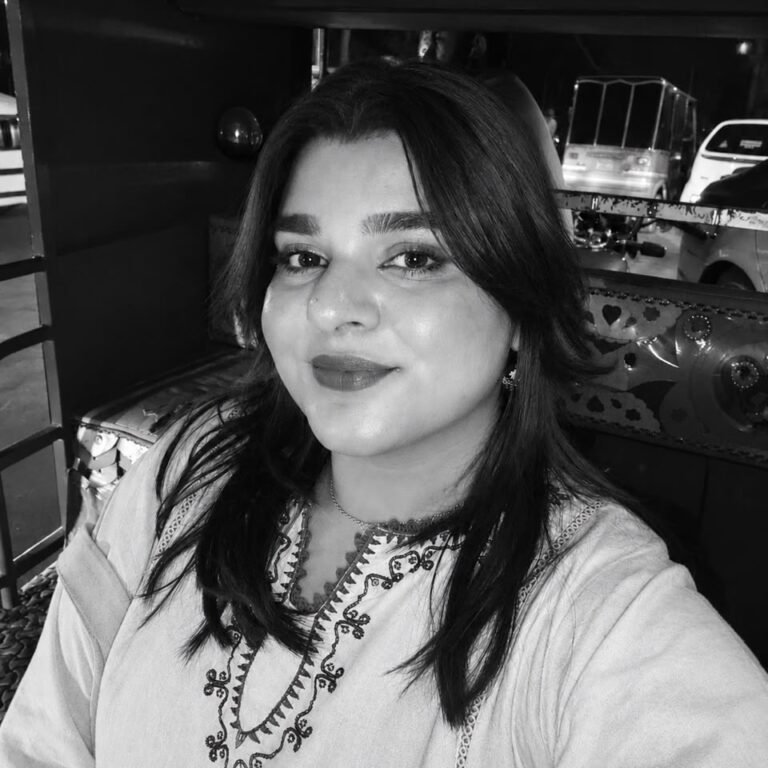
Marwah Waqar (b. 2003) is a Pakistani multidisciplinary visual artist from Haripur, Hazara. She graduated with distinction in Fine Arts from Institute for Art and Culture, Lahore, in 2026. Her practice primarily works with painting and explores memory, childhood and the ways personal experiences change as they are remembered over time. Through fragmented imagery, domestic spaces, toys and familiar everyday forms, she reflects on intimacy, absence and the reconstruction of personal narratives. Her work draws from her own memories and family experiences, often exploring how these memories shift, fade and become reconstructed over time.
Notes on childhood & reclamation
What you see in the end is not my memory; it’s a painting. The memory is more in everything that happens in my head while I’m making it. And I don’t think there’s really a right or wrong memory. There’s just what comes back to you and what you make from it.
You’ve said you started collecting toys partly because they were things you weren’t allowed to have as a child. What was it like collecting the first one as the older version of yourself; did it feel like joy, grief, or something else entirely?
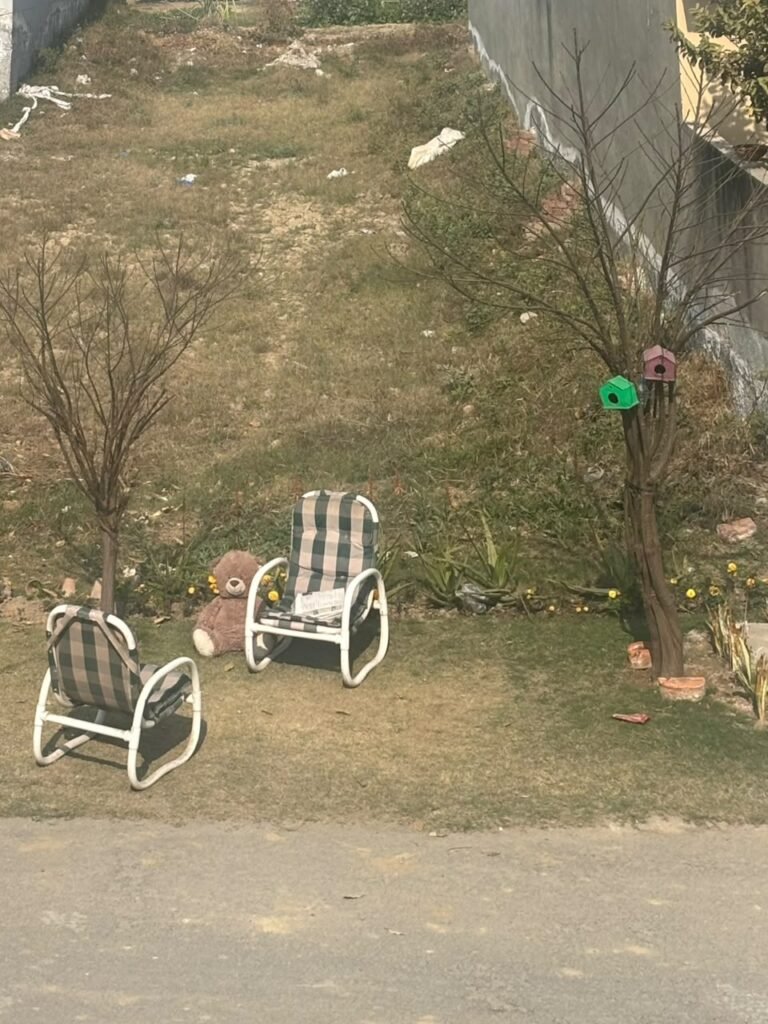
When I got my first toy, a couple of years ago, it felt like an act of rebellion. But when I started collecting more toys, quite recently before actually beginning this project, I honestly didn’t feel much towards the toys themselves. I was happy because I was with my friends and we were all buying things for ourselves, our siblings and sometimes much more than we actually needed. In a way, it felt like our inner children were growing around us again, and there was a lot of joy in that.
But grief circles back too. When I was a child and got a toy I really wanted, the happiness was almost overwhelming, like giving a child a piece of candy. This time, I didn’t feel that same excitement. As a child, you buy a toy thinking about dressing it up, playing with it and everything you’re going to do with it. I was looking at the toys very differently. I had finally gotten something I had wanted as a child, but I was no longer the child who wanted it. I think that’s where the grief comes from you can experience something you always wanted later in life but it can never be the same as experiencing it in childhood.
As you keep reconnecting with your younger self through this work, how has it changed you as an artist?
My reconnection with my younger self doesn’t only happen through my art. It also happens through all the young children around me, and watching them has been very humbling. It gives me perspective and reminds me how much the smallest things mattered when we were younger things we slowly forget as we grow up. I think those little joys should always remain somewhere within us and around us.
It has changed me for the better, although it can be overwhelming at times. But now, instead of those memories just sitting somewhere in the back of my mind, I’m actually trying to sit with them and understand what they mean to me. In that sense, it has become a learning curve not just as an artist but as a person trying to understand herself a little more.
Finding the right memory, you’ve said, is harder than the painting itself. What actually makes a memory the “right” one for a piece?
Yes, I think finding the right memory is harder than painting itself. There’s this idea in psychology that intense or prolonged trauma can affect how memories are formed and recalled and I relate to that in my own experience. I don’t remember a lot of things clearly. Sometimes it’s just an inkling, a small hint that comes from somewhere in my mind, an old photograph or even from watching the children around me. I take those fragments and build the piece around them. But it’s while I’m making the work, composing it, building it, deciding what belongs and what doesn’t that I begin to understand the memory more. What you see in the end is not my memory; it’s a painting. The memory is more in everything that happens in my head while I’m making it. And I don’t think there’s really a right or wrong memory. There’s just what comes back to you and what you make from it.
Your palette stays soft and bright even when the memories underneath are heavier. Do certain colours attach themselves to certain memories for you, or is the softness a decision made after the fact?
My palette stays bright because I don’t think pain always looks dark. I could paint everything in a darker palette and make the pain obvious, but that isn’t how it always exists. Pain comes in many forms and colors; it’s what you notice or choose to look for, that makes the difference. In that sense, the brightness is also quite personal to me. No matter what I’ve gone through, you probably wouldn’t be able to tell just by looking at me. And I think that’s true for a lot of people.
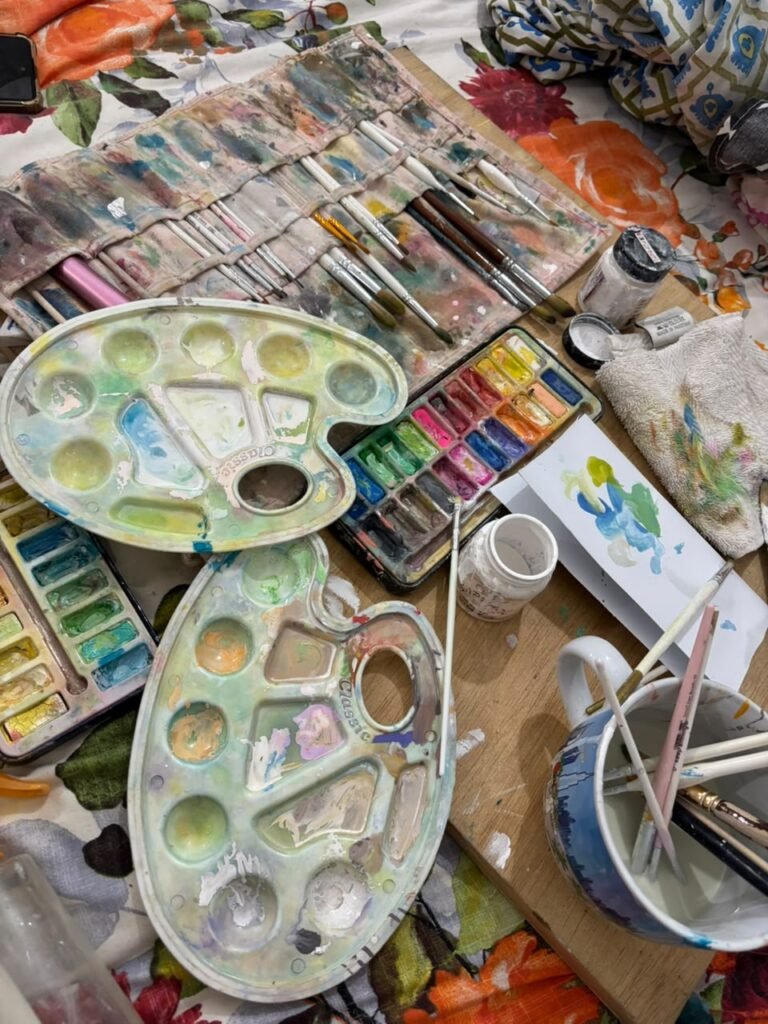
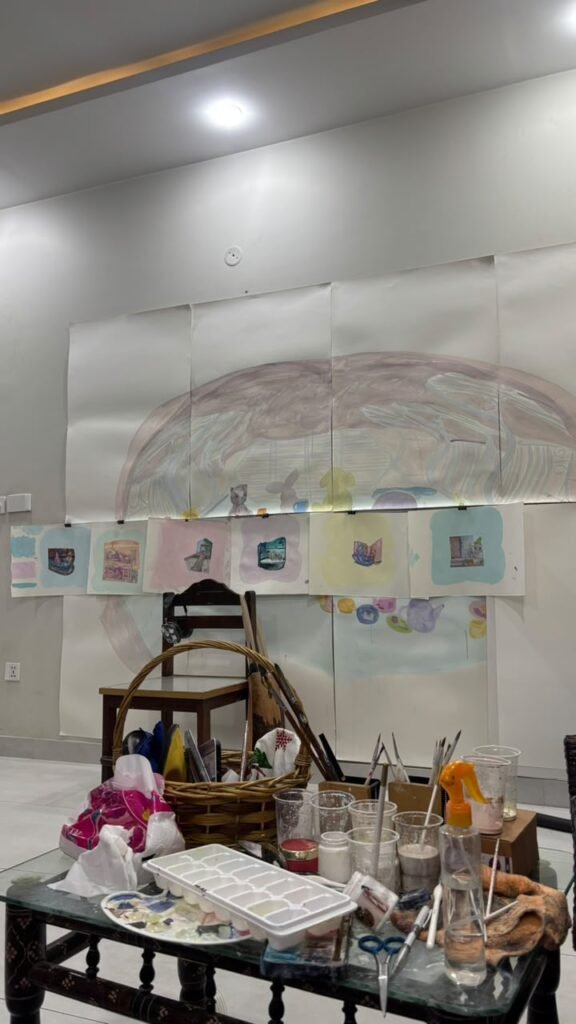
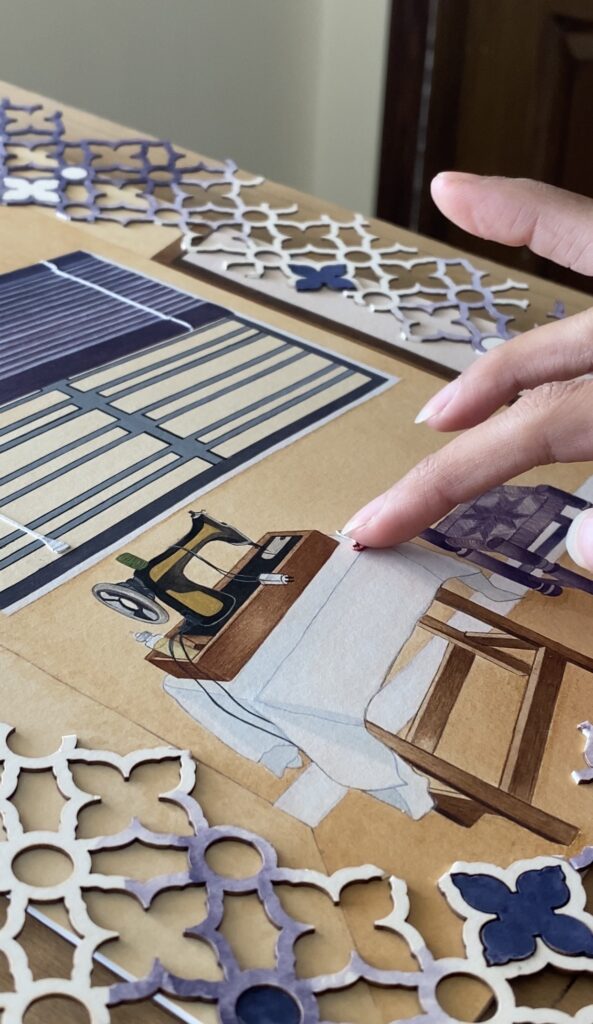
The softness, though, isn’t attached to particular memories. It comes from the way the layers of the medium react with each other. I work wet-on-wet, allowing the layers to bleed, melt and merge into one another, rather than letting each layer dry completely before adding the next. Over time, I started seeing that process as a reflection of memory itself, one memory can bleed into another, transform it and change the way you remember the whole thing. What began as something that happened naturally in my process eventually became a conscious choice to keep allowing that softness to exist.
How has your past shaped what you believe about art and making?
My past has made me see art as something deeply emotional and something that takes a certain kind of courage. Sometimes you want to say so much and simply cannot find the words and art gives you a way to be emotionally naked without saying anything at all. A stroke, a colour or a composition can communicate something that words cannot. I think that is what makes art so powerful to me, it can hold so much emotion with so little. Coming from a background with no connection to art and finding it only when I entered art school, it became a very natural language for me. In many ways, art became a rite of passage and a way of communicating things I otherwise might not have known how to say or might have kept inside me like a fire that would eventually consume my entire existence.
Political decisions shaping children’s welfare is something you’ve said you’re drawn to. What’s a decision, big or small, local or national, that you feel doesn’t get talked about enough in terms of what it actually does to children’s lives?
One thing I feel does not get talked about enough is violence against children within the home, especially physical and verbal abuse. There is still this idea that if a child is being “naughty” , beating them is a form of discipline, when it is violence and I think we need to start calling it that. Children learn by watching the people around them. If a child grows up seeing shouting, humiliation or physical violence, how can we then be surprised when they mirror those behaviours?
We put so much responsibility on the child without looking at the environment that shaped them. I also feel strongly about abuse and sexual assault within families, because these things are often kept silent precisely because they happen within the home. If I ever have a larger platform as an artist, these are the conversations I would want my voice to contribute to. No child should have to grow up believing that being hurt, shamed or frightened is simply a part of being raised.
If you could get people to pay attention to just one overlooked thing, whether it’s about children, politics, or something else entirely; what would you want it to be?
If I could get people to pay attention to just one overlooked thing, it would be domestic abuse within families physical, verbal and emotional. I think there is still this idea that if a child had a roof over their head, food on the table, toys or an education, then everything else should somehow be overlooked. Yes, those things are blessings and you understand their value as you grow older, but they do not justify the pain or abuse that may have existed alongside them.
You cannot hurt a child and then tell them they should be grateful because you provided for them. I also think that when a child has no one standing up for them, that vulnerability can extend beyond the parents to siblings, cousins or other people around them, because they learn that the child has no voice. That is why I feel responsibility has to begin with the adults who bring children into the world to protect them, listen to them, communicate with them and set an example for them. If we changed that, I genuinely believe we could change a lot about how children grow up and, eventually, how they treat the world around them.
If your younger self could see the paintings you’re making about her now, what do you think she’d think?
Honestly, my younger self probably wouldn’t even believe that I made it this far. There were times when life felt so unjust and painful that I couldn’t imagine myself getting past certain experiences, let alone becoming the person I am now. So I think she would first be incredibly proud to see me here, to see that I finally have a voice and that I no longer need everyone around me to validate what I feel. I used to think I had to make people understand me, but growing up taught me that sometimes you have to stop drinking from an ocean that is only making you thirstier. You have to keep paddling, even if you don’t know whether you’ll find a shore or a boat that will carry you there. I think my work became that boat for me. It gave me a way to move through the grief, the pain, and everything I had kept inside, rather than drowning in it. So I think she would be incredibly impressed that I turned something that once felt unbearable into something beautiful, and that I’m still paddling. And honestly, I think she would look at me, probably cry a little, and smile because so much of what I do now is still for her.
I think I can be quite hard on myself and maybe on other people too, because I have this idea that you have to keep battling through things, keep running, keep moving. But I’m also learning that sometimes, when you get tired, you are allowed to float for a while. You don’t always have to be fighting the current. Just don’t let yourself believe that the moment you are in is all that your life will ever be.
There have been times when I genuinely felt like I had no voice, no way out or no future beyond what I was experiencing at that moment. But I think there is something important about knowing, even quietly, that something is wrong. Sometimes consciously you may not even know what to do with that feeling, but subconsciously, knowing that you are on the wrong side of something is already the beginning of changing it. You eventually find your voice and then you figure out what to do with it. Life is so much bigger than the experiences that, in the moment, feel like an entire world. So keep paddling, but when you need to, float. Give yourself time. And whenever you get the chance, speak up for yourself, but also speak up for someone who cannot yet speak for themselves. I think sometimes surviving is not about getting to the shore immediately, sometimes it is simply staying above the water long enough to find your way there.