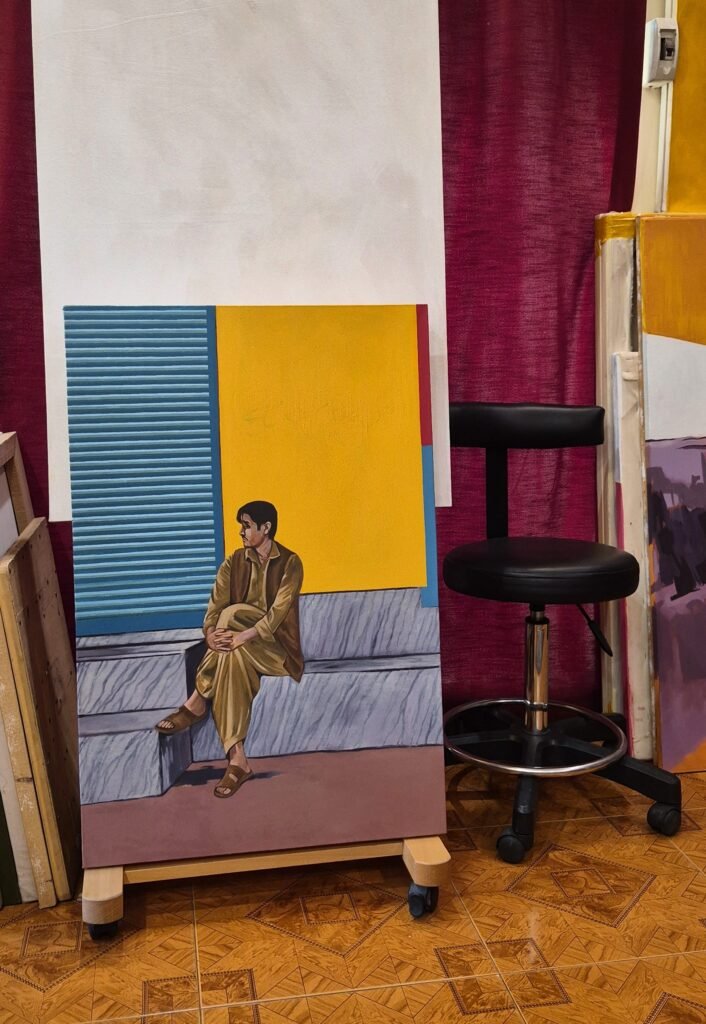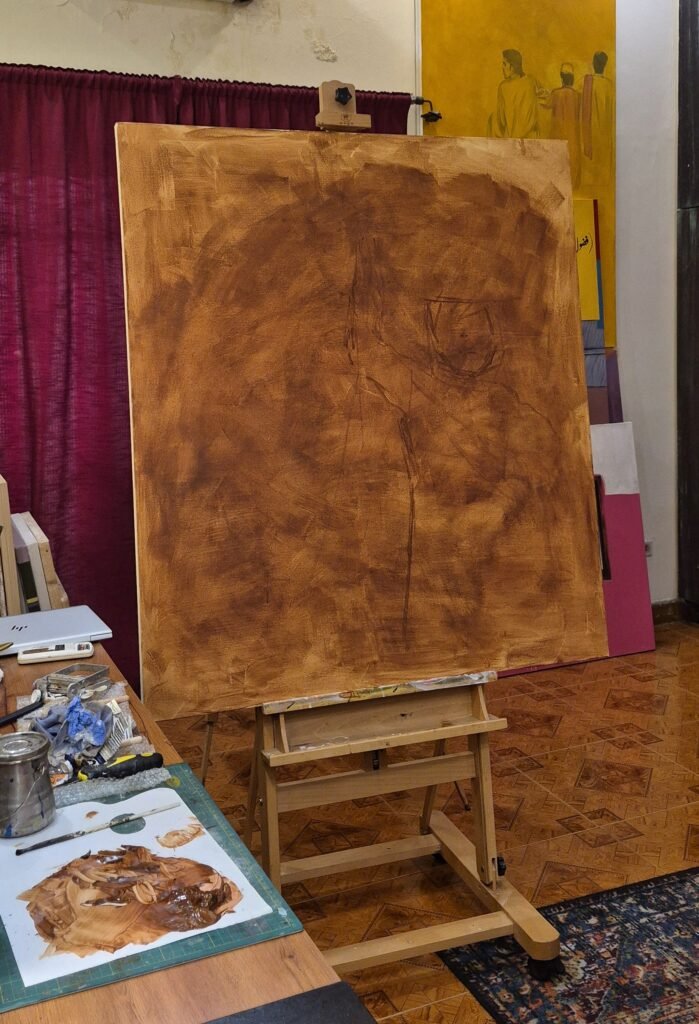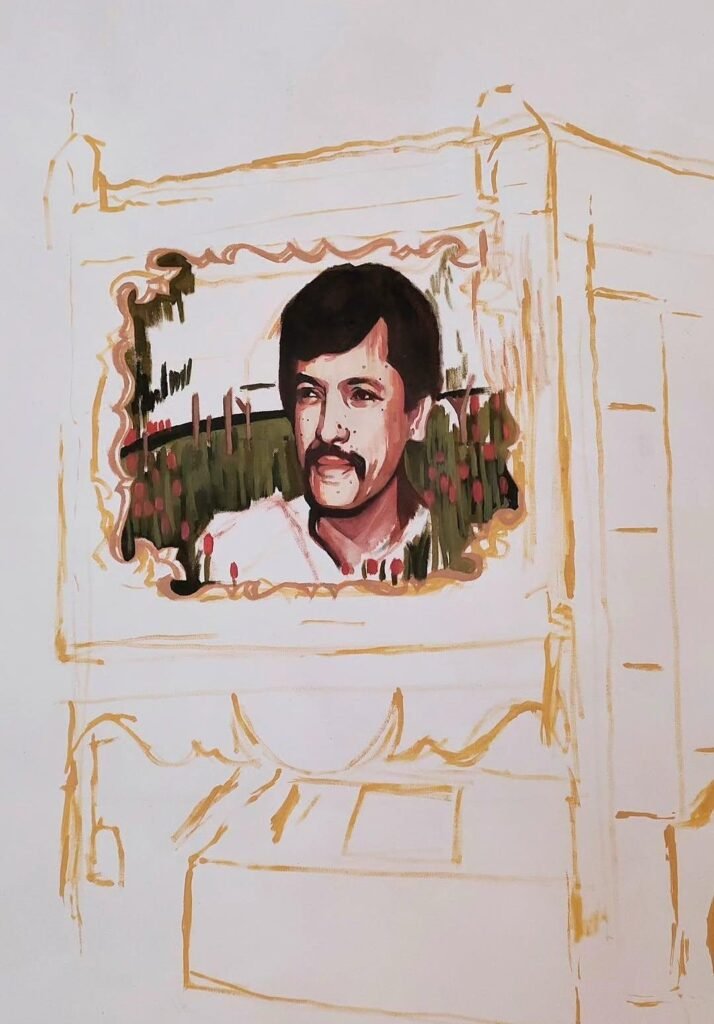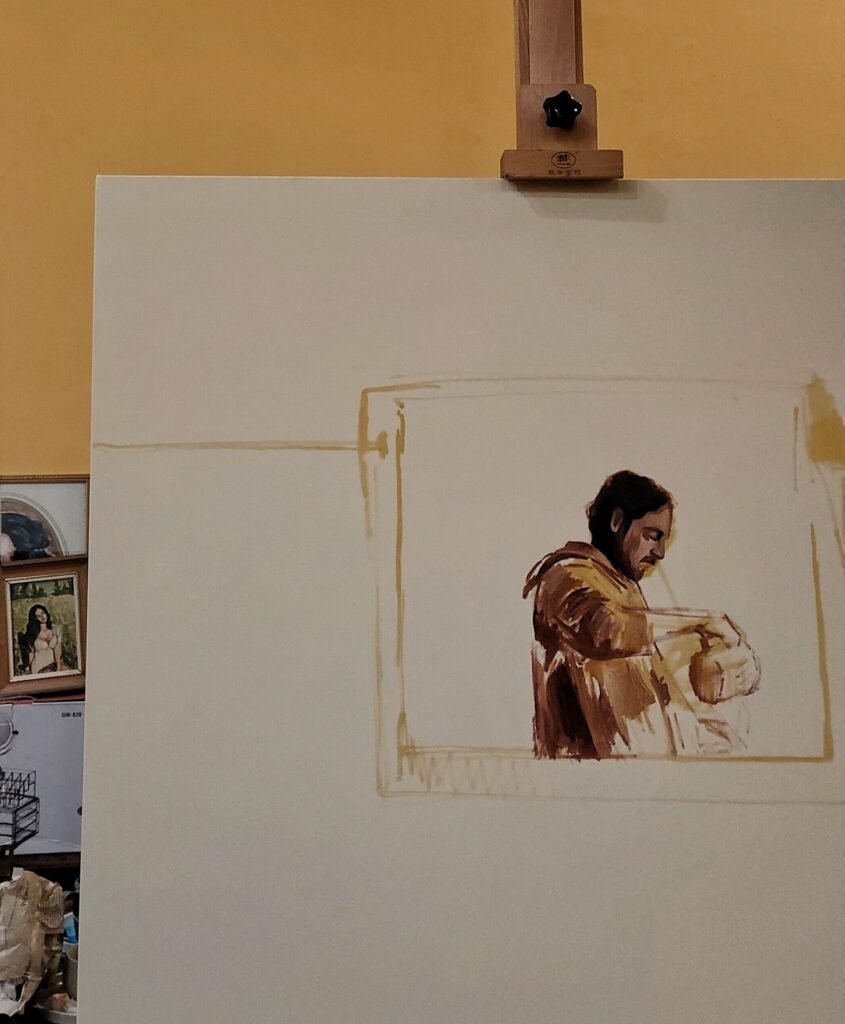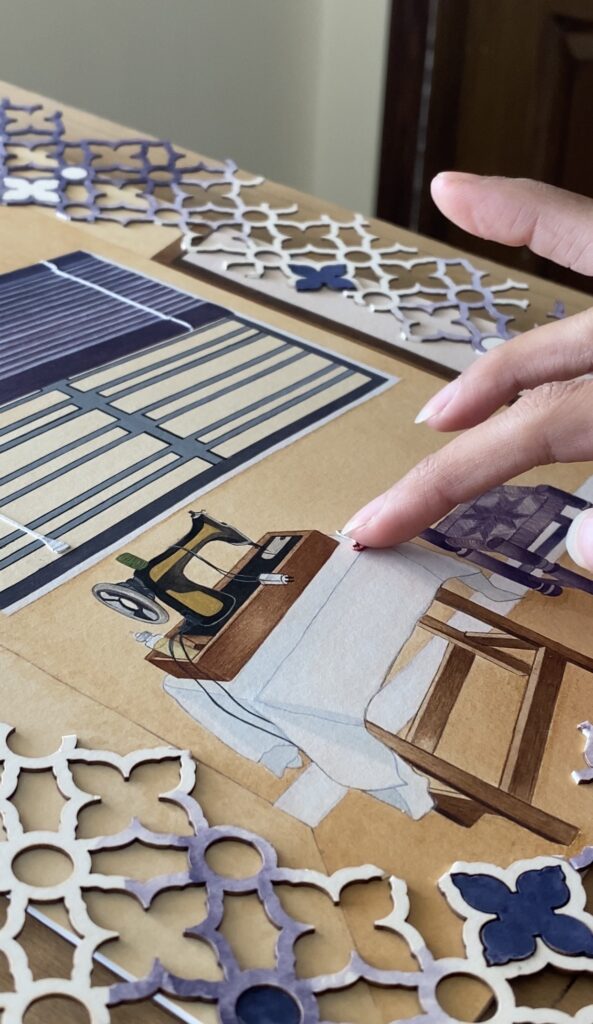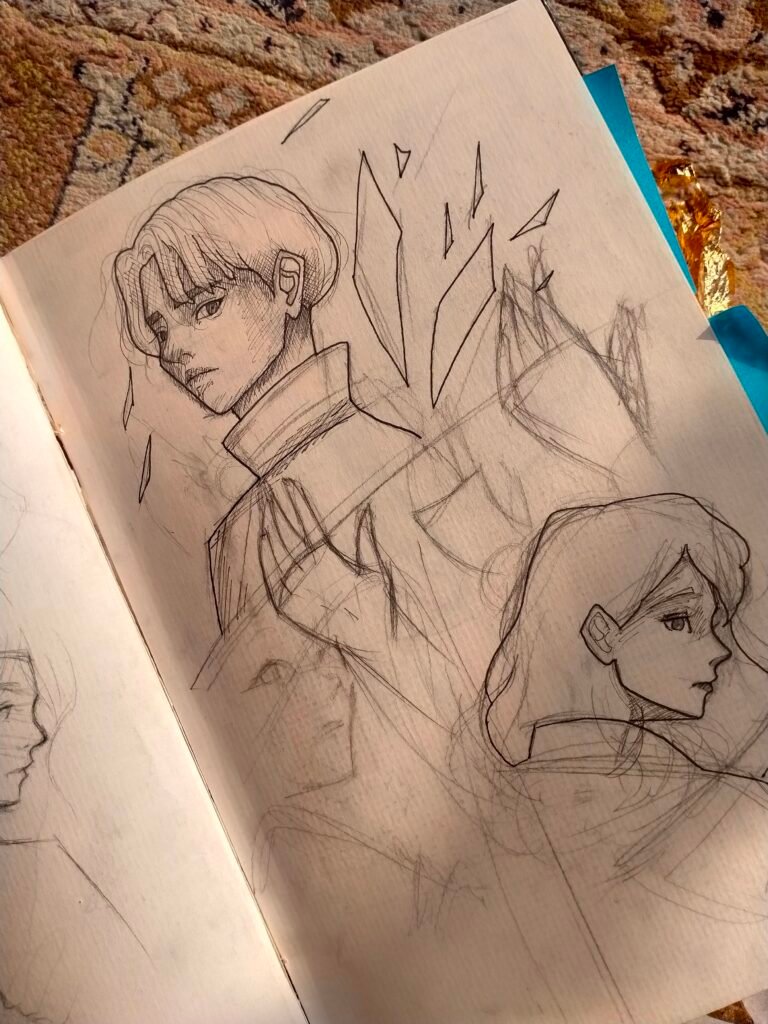
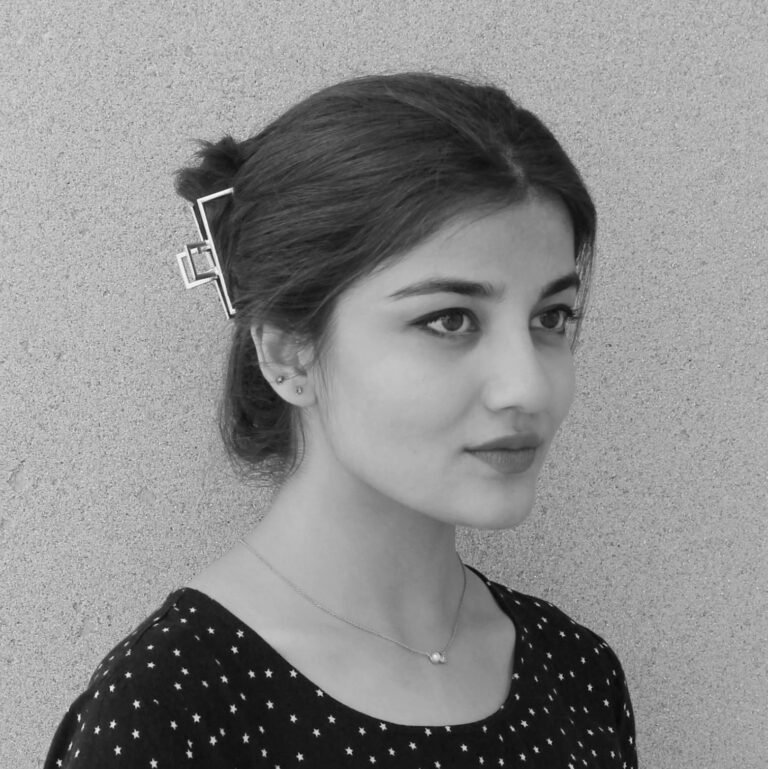
Aimen Manzoor, a visual artist based in Lahore, Pakistan, holds a BFA with a major in Painting from the National College of Arts(2020). Her artistic journey includes showcasing her work both nationally and internationally. Proficient in painting, illustrations, watercolors, and ceramics, her work is a part of the permanent art collection at Ambiance Art Hotels in Karachi and Hunza. Her artwork predominantly features figurative elements, drawing inspiration from everyday occurrences and mundane experiences. By observing everyday compositions that captivate her interest, she aims to create art that resonates with diverse audiences. Emphasizing the importance of accessibility and readability, she delves into representational art. Aimen focuses on everyday events familiar to all, making art approachable and understandable to a broad spectrum of viewers.
Notes on ways of making, accessibility, and the ordinary
What I want from my viewers and what I have thankfully succeeded in achieving over the years is the understanding and realisation that art does not need to be this highly intricate concept, or a visual idea that gives the audience a hard time reading it.
You’ve spoken about wanting your work to remain readable and accessible. What role do you think art should play in people’s everyday lives?
I feel like art does not need to be this thing that is only accessible for a very selective and/or concentrated group of people. Even if a broader audience is not able to acquire it- they should be able to enjoy it. It should not be a luxury for confined art spaces rather it should be able to interact with a bigger group of people. This is the biggest reason why I always gravitated towards painting ordinary everyday scenes so people can easily read the art I create and take a pause in their super busy routines and just be more present in the now and look around themselves to be able to find more depth in the otherwise simple setting they’re in.
Your meme-inspired works feel different yet closely connected to your larger practice. How do you see humour, internet culture, or memes functioning within your work?
While the imagery of the meme-inspired works might feel different, the idea is the same as my usual professional practice. I believe memes give individuals a shared vocabulary and build a strong sense of community across entire generations since they rely on universal shared experiences. This works out perfectly for the framework of my practice where I can target a bigger audience.
Contemporary art spaces often place heavy emphasis on theory and academic language. How do you deal with that within your own practice?
While I understand how theory and academic language shape the way we justify visual work and also allow artists to look beyond aesthetics and articulate the cultural, political and social dimensions of their practice I also absolutely dislike having to write anything on my practice. So much so that this dislike even seeps into my ability to talk about my work at times. I have always had trouble when it comes to using highly intricate and sophisticated art language for my practice. Although, I believe when it comes to using the most casual and layman vocabulary for explaining my work and my process, I can talk for days. It is very interesting how that complements my practice too. But that being said, my academic training in Fine Arts for sure comes in handy whenever I have to use fancy words for my practice and with more and more experience with galleries, I have surely learned my way around it which now has made the whole process of working with contemporary art spaces a lot smoother and easier for me personally.
It was interesting to hear that your colour palettes aren’t heavily pre-planned. When you’re working, what usually influences your choices around colour?
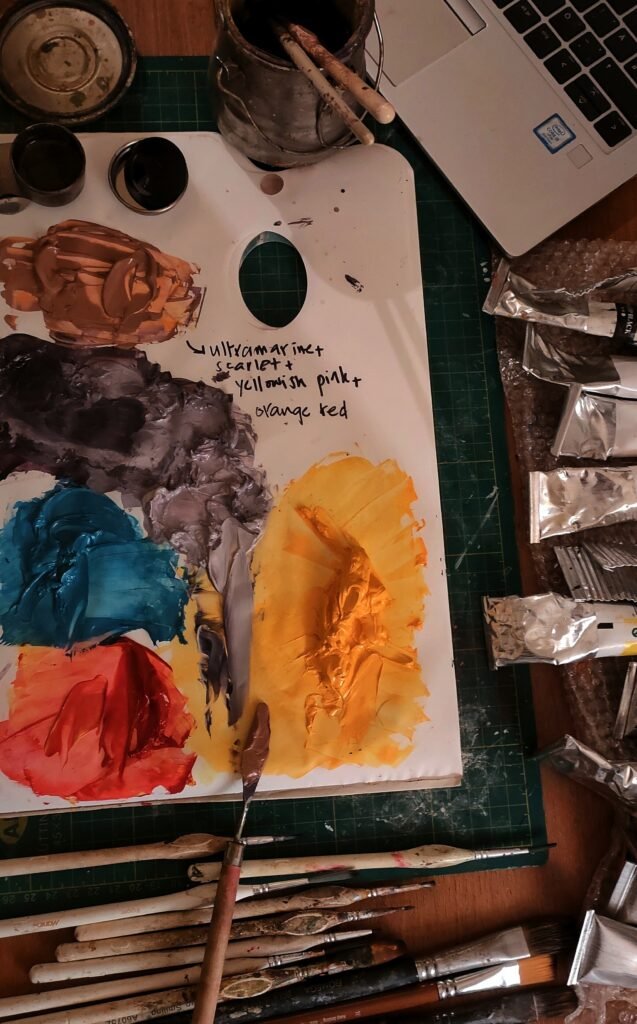
It’s very spontaneous and unplanned- how my color palette comes together and how the colors interact with each other to bring about that highly saturated painting towards the end. I believe it comes from this innate need of warping these otherwise simplistically realistic or banal scenes by using stark colors. It can also be put this way; I like to recreate ‘the ordinary’ everyday that is familiar to most of us with a little manipulation that makes it seem a little withdrawn from the usual. The seemingly empty or solid backgrounds in a very saturated color with respect to the rest of the painting give the objects or elements in the foreground an autonomous standing.
How do you document or gather references in your daily life?
I take a lot of pictures all the time. It has become this sort of a habit by now, a part of my everyday routine. I go out and see a composition I like or find interesting I take my phone out as if almost on autopilot and take pictures. The ideality of ‘painting the everyday or the mundane’ for me lies in making the whole process feel also very everyday and not forced. Therefore, I started with the most basic tools I had available at hand i.e. my phone, my surroundings, objects and elements around me- so as to make my whole practice and process feel as relevant and understandable for my audience as possible.
This is how I began taking pictures on my phone all the time and the method of gathering references for me has still not changed- it is still as simple as ever before. This is step one for me, sometimes I merge different elements from different references I have gathered to produce a newer customised reference for a painting, sometimes I omit unwanted details, sometimes that happens unintentionally along the way once I start painting onto the canvas, at other times, I end up asking a random person online if I can use an image they have posted for a painting, and at other times I end up going through heaps and heaps of old references I have gathered over the years and I always end up getting so impressed by how an old picture from years ago suddenly feels so relevant as if almost begging to be painted.
What kinds of emotional responses are you interested in creating for the viewer through your compositions?
What I want from my viewers and what I have thankfully succeeded in achieving over the years is the understanding and realisation that art does not need to be this highly intricate concept, or a visual idea that gives the audience a hard time reading it. And that it can be based on some very basic imagery that we have grown used to seeing, and still come together to become a unique work of art every time.
What has that shift towards a more painterly style opened up for you conceptually or emotionally?
I have yet to explore a more painterly method of painting in my work so I cannot really say what it has done for my practice but I am really excited. I feel like it is going to give me more freedom to be expressive in terms of the visuals in my work and not just limited to that, I believe it is going to help me incorporate more emotion into how I paint. While all of this is a theoretical take on it as of yet, I am looking forward to how this one change reacts with my practice.
Are there mediums, materials, or techniques you feel curious about exploring next?
There was this one show I did with Dastaangoi where I translated my work into site specific installations and everything about that show was something I greatly enjoyed. From the initial research to the sketches to the process to the spontaneity of deciding to do an installation instead of a painting to putting it all together, every step was a treat in itself and highly challenged my usual methods. Ever since that sculptural take on my work, I have had this urge to try out other mediums and see how they alter my practice and where they take it. It is something I would surely want to try out someday.