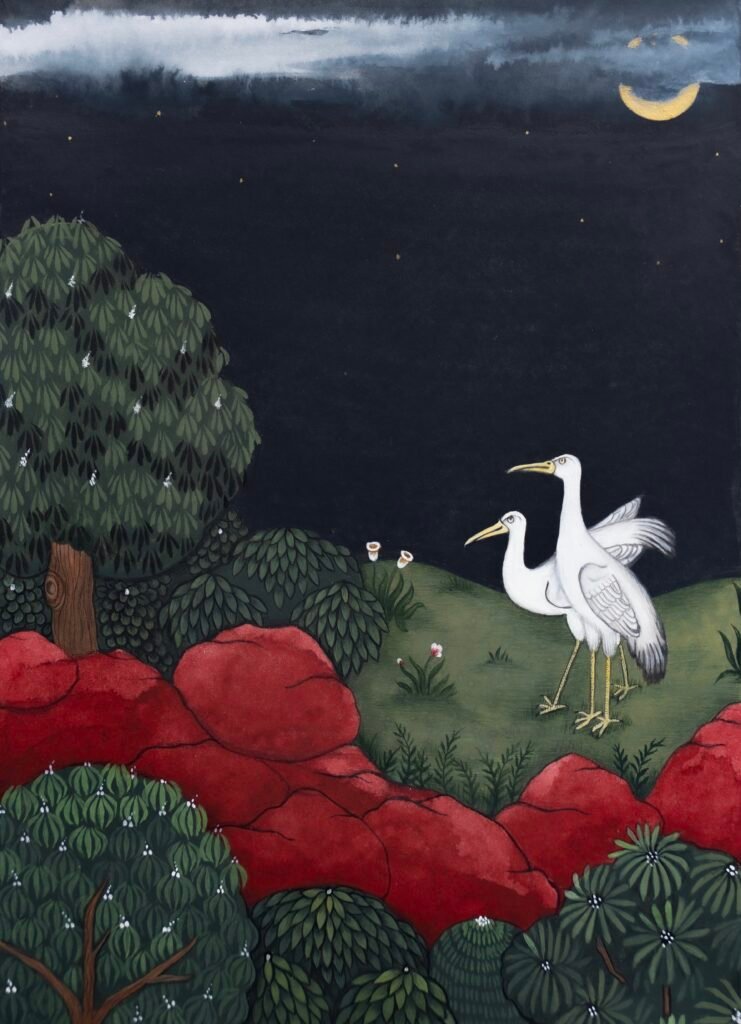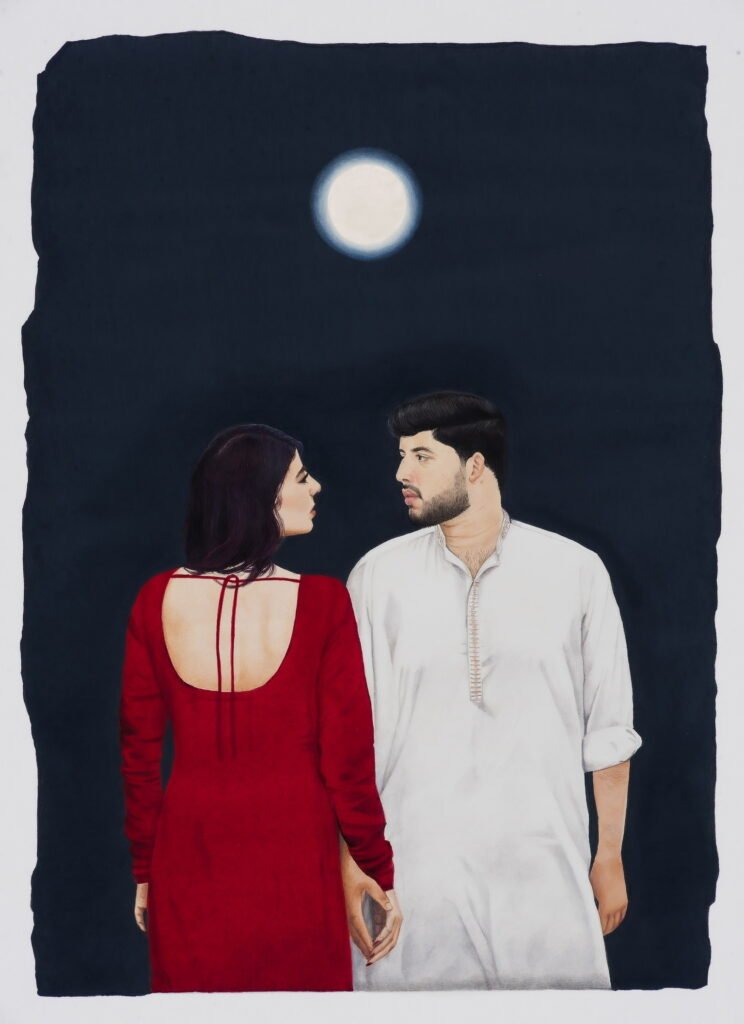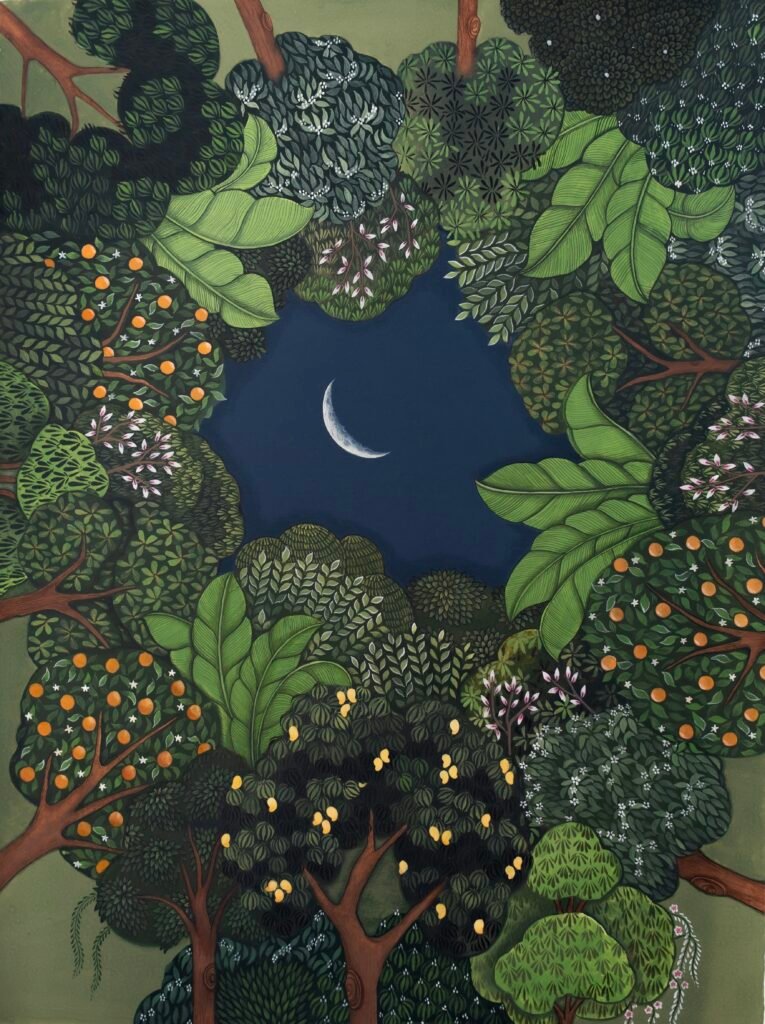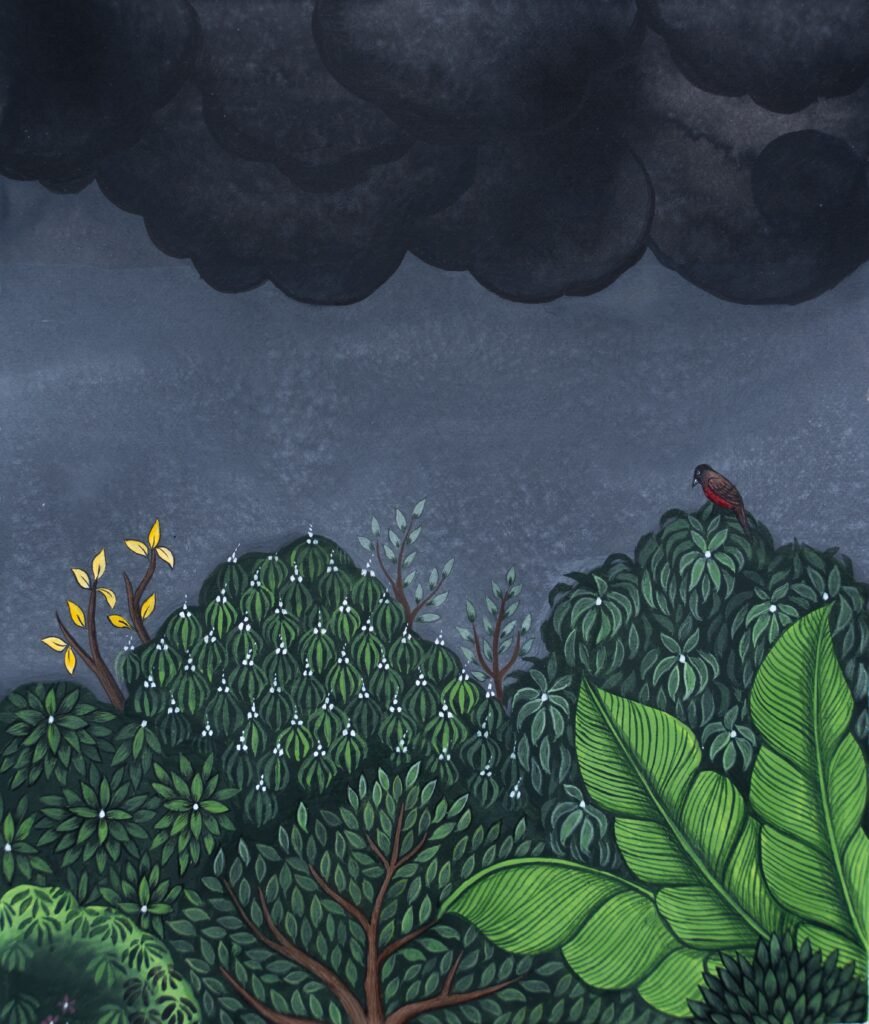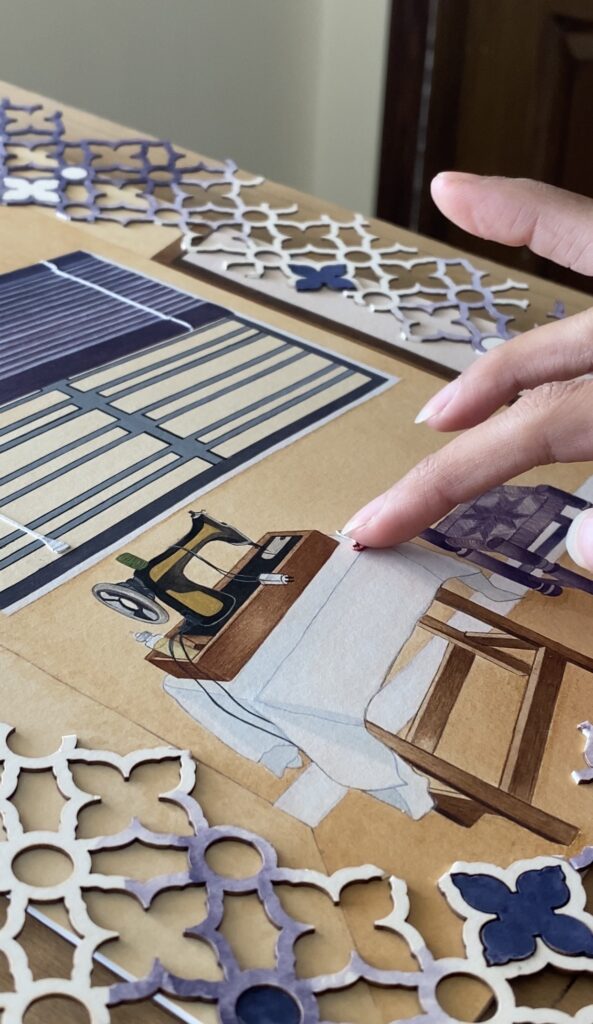

Mahnoor Salman Khan is a visual artist from Lahore, Pakistan currently based in Manchester, UK. She holds a BFA in miniature painting from NCA, Lahore, and an MFA from Manchester Metropolitan University, UK. Her work embarks on an artistic journey that intricately weaves traditional miniature art with a contemporary perspective, focusing on portraying the emotions of longing. emptiness, and the enduring nature of love. Her current body of work is rooted in the belief that nature is a love letter from God, an expression of care that surrounds us in quiet, enduring ways; creating meditative works grounded in nature, harmony and spiritual introspection.
Notes on love, nature, & connection
My faith taught me that creation is a gift and over time I came to feel that every leaf, every flower, the changing seasons, the open blue sky and everything around us carries a quiet reminder that we are loved and sustained.
What’s your usual work routine?
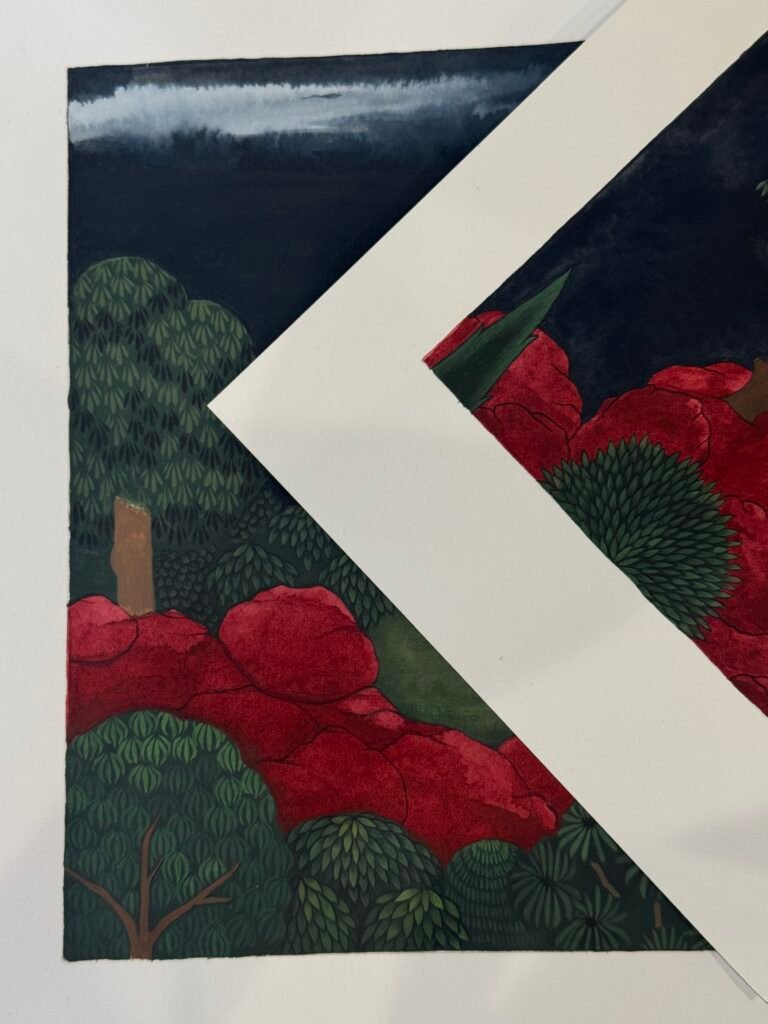
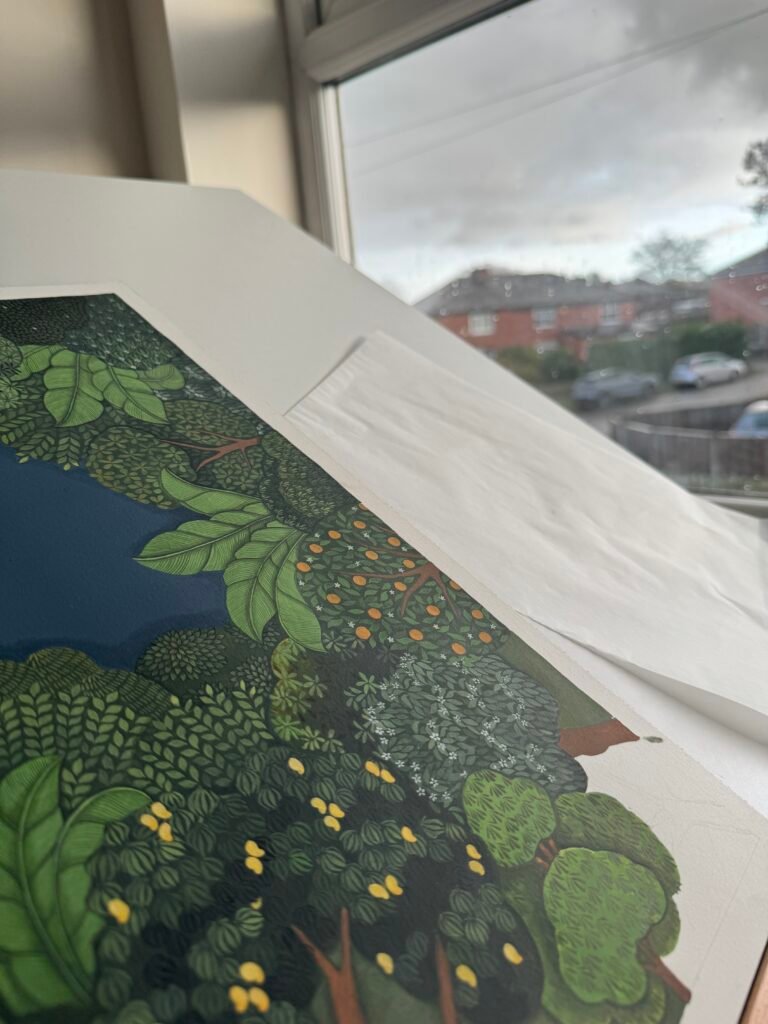
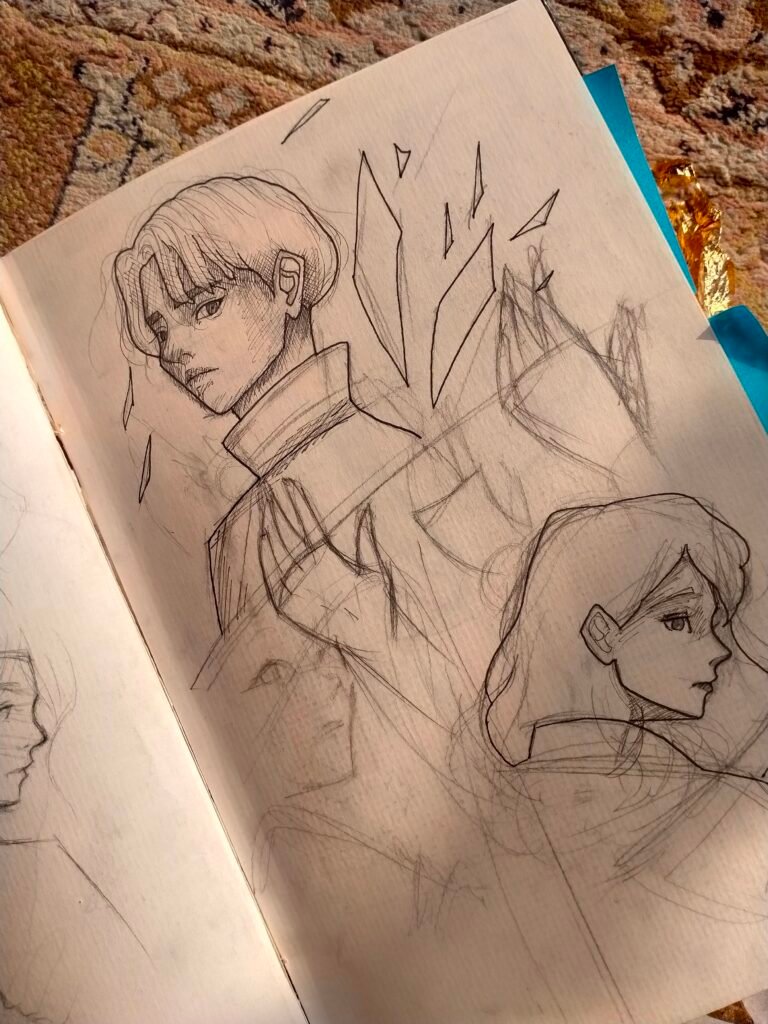
My routine begins quite simply with everyday life. I do my house chores, take care of the little things in my home and then slowly disconnect from everything around me to enter my own creative space. I like that transition since it lets my mind become quieter, and more present. Once I begin painting, the process becomes almost meditative. I work slowly, mixing colours, sketching my ideas and letting the painting unfold naturally. It feels less like creating something from nothing and more like listening for something that was already there.
You describe nature as a love letter from God. When did that way of seeing first arrive — a specific moment, or something that built slowly over time?
It wasn’t a single moment, it unfolded slowly. The more I paid attention to nature, the more I began to see it as an expression of divine care & love rather than just beauty. My faith taught me that creation is a gift and over time I came to feel that every leaf, every flower, the changing seasons, the open blue sky and everything around us carries a quiet reminder that we are loved and sustained. Painting trees through the visual language of South Asian miniature painting is my way of honouring that realization and sharing that feeling with others.
Do your compositions and landscapes emerge from documentation, memory, or intuition? Can you walk us through how a piece begins?
My compositions begin with intuition. I don’t paint specific places; instead, I gather impressions from walks, memories, photographs and moments that stay with me. These fragments slowly come together into imagined landscapes that feel emotionally true rather than geographically real. Each painting grows organically guided by the feeling I want to evoke more than by documentation.
You’ve spent years painting nature closely. Has that changed your relationship with it — do you see a leaf differently now than you did seven years ago?
Absolutely. Painting has taught me to really see. Before, I might have called a tree simply green, but now I notice the blues, violets, ochres and countless other colours that exist within it. Nature is never made of one colour, it is layered, subtle and constantly changing with the light. The more I observe it, the more I realise how generous and complex it is. That deeper way of seeing has transformed not only my paintings but also the way I move through the world.
Does painting change how you feel love or longing? Or is it the other way around, that the feeling comes first and the painting follows?
The feeling always comes first. I’ve always been a hopeless romantic and I’ve always believed that love is the answer, that it is the force that connects us to one another, to nature and to the Divine. Painting is simply how I give that feeling a form. At the same time, painting has deepened those feelings. It has made me more attentive to quiet moments, more aware of beauty and more grateful for the love that already exists around us. It has taught me that longing isn’t always about what’s missing; sometimes it’s a way of reaching closer to something sacred. My landscapes become the language through which I can express that love and longing.
You trained in miniature painting at NCA, then went on to Manchester Metropolitan University, two very different worlds. Did the distance from Lahore change the way you relate to the miniature tradition, or bring you closer to it?
It actually brought me closer to it. I remember trying to absorb Lahore into my soul as much as I could before I left, knowing how deeply it had shaped me.
Lahore will always be my first love, and being away from it made me appreciate the richness of its artistic traditions even more. Distance gave me the space to see miniature painting not just as a technique I had been trained in, but as a language I carry with me. At the same time, I found unexpected similarities in Manchester. Both cities have a strong creative spirit, beautiful parks and a culture of walking and living alongside nature. Those connections made the distance feel smaller and reminded me that while places may differ, the feelings they evoke can be remarkably similar. My work today lives somewhere between those two worlds, rooted in Lahore but shaped by the perspective that Manchester gave me.
What part of the process do you love most; the making, the finished painting, or watching someone else encounter it?
I love all parts of the process because each stage holds a different kind of joy. The making is where I feel most connected to the work, the quiet moments of choosing colours, building layers and watching an idea slowly come to life. The finished painting feels like a feeling that has finally found its form.
But the most special part is seeing someone else encounter it and connect with it. I especially love when my husband sees a painting for the first time, the awe in his eyes, every single time, reminds me of the beauty of creating something from the heart and sharing it with someone you love.
If your paintings could speak, what’s one sentence they’d all agree on?
If my paintings could speak, I think they would all say: “Love is the purpose of our existence.”
They would speak of love not only as something we find, but as something that gives meaning to our entire journey. Even longing for something we love is a beautiful part of that journey, it keeps our hearts open, makes us feel deeply and reminds us of what we cherish. Love is the beginning and the destination; the quiet force that connects us to one another, to nature, and to the Divine.