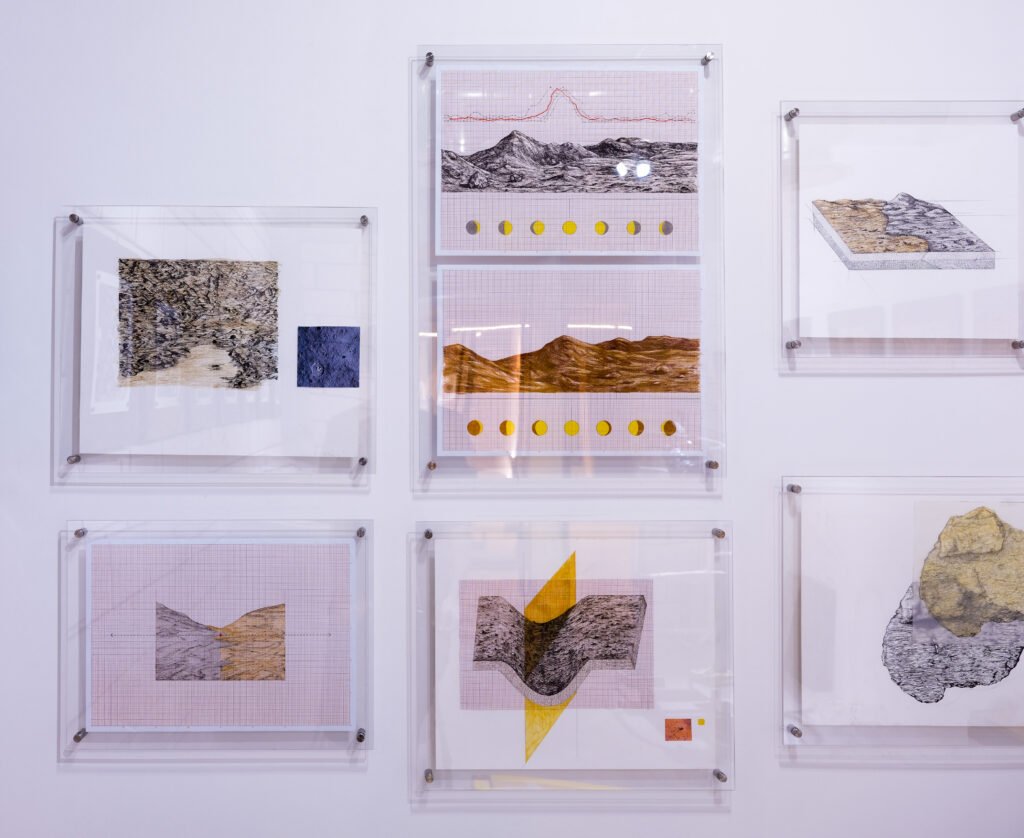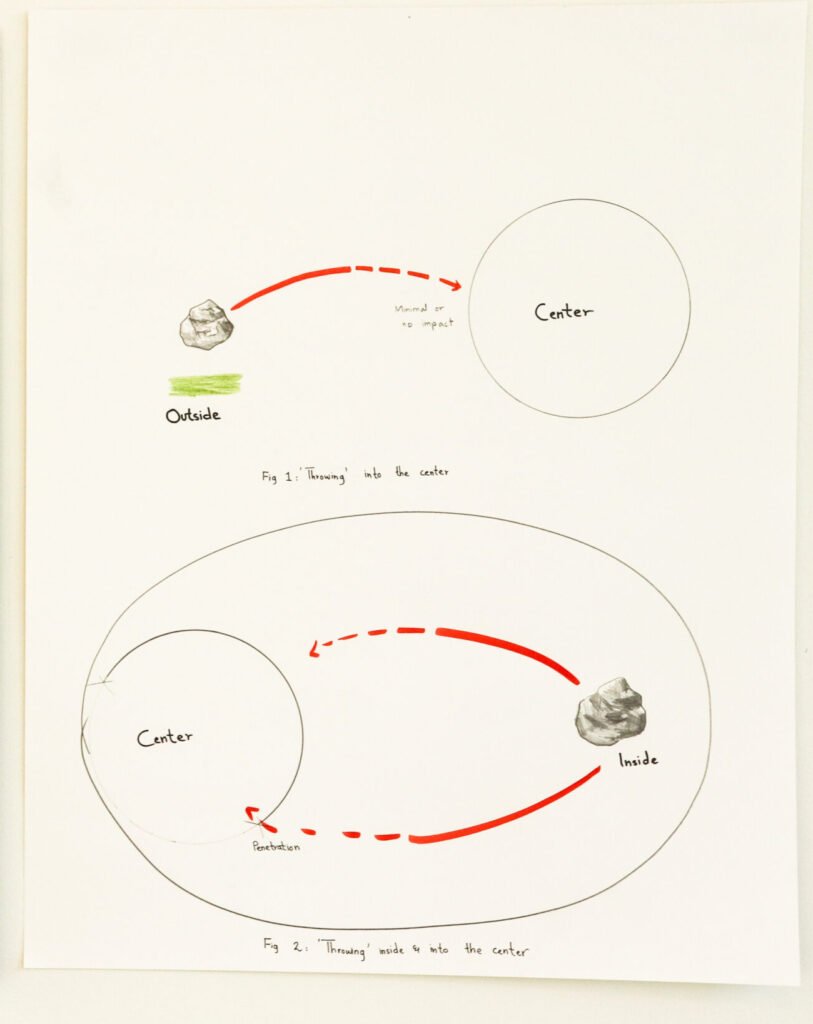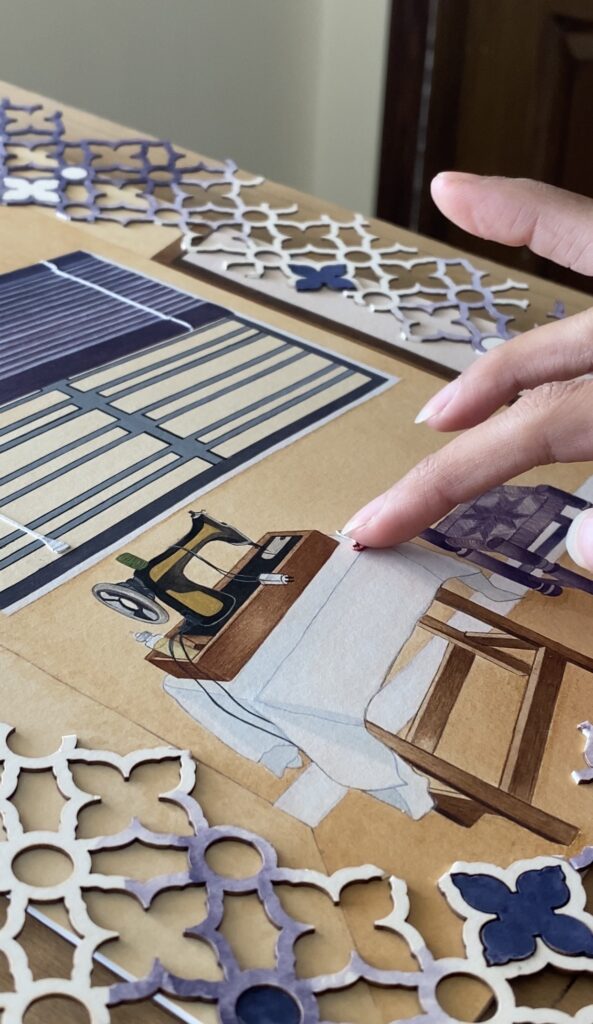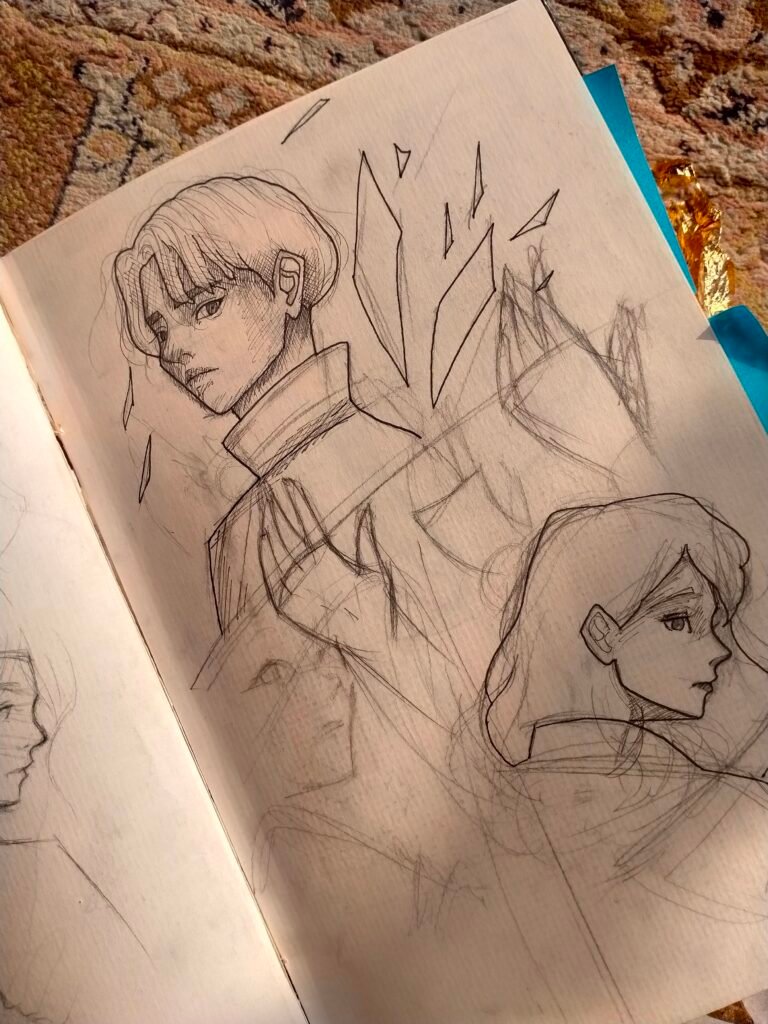
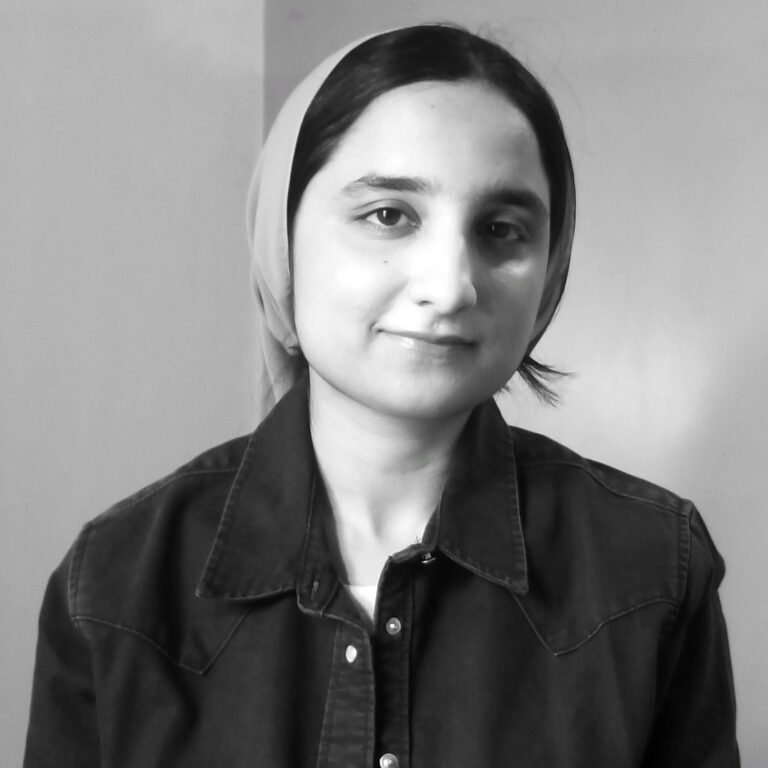
Aleena Akbar Khan is an interdisciplinary artist, currently based in Pittsburg, USA, where she’s pursuing her MFA at Carnegie Mellon University as a recipient of the Regina and Marlin Miller Fellowship. Her work spans across sculptural installation, drawing, publication, sound, and video. Through political, technological, and ideological interlocutors, her work considers how meaning is abstracted, fractured, or fictionalized as it loops through translation.
She graduated from the National College of Arts, Pakistan, in 2022, earning a BFA in Studio Practice. In 2024, Aleena was selected for the Prince Claus SEED Award, and has participated in artist residencies in Berlin, Saudi Arabia, and Ireland.
Notes on resistance, structure, & progress
Politics and affect cannot all be done and resolved on the gallery wall, but I deeply believe that a work of art is always imbued with power, both the structural power and the power to signify. I think the individual artist has the responsibility to resist the essentialization of bodies and identities. The space for global contemporary art is never neutral ground for expression.
When you think about your practice today, what feels most different about the artist you are now compared to when you first began?
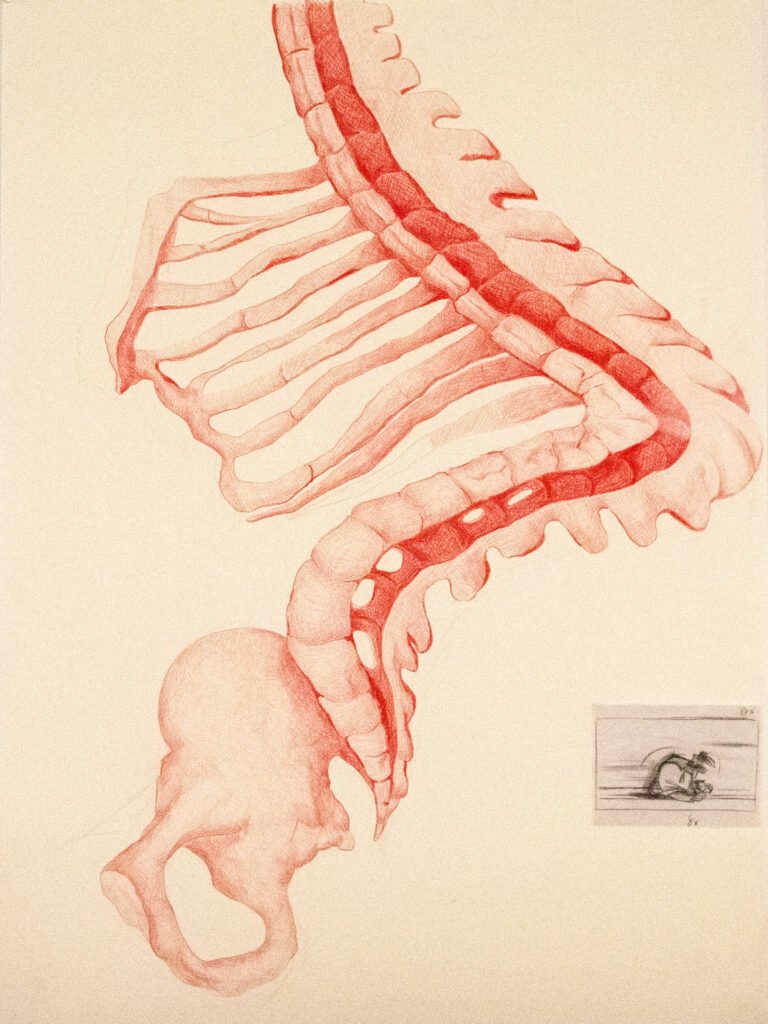
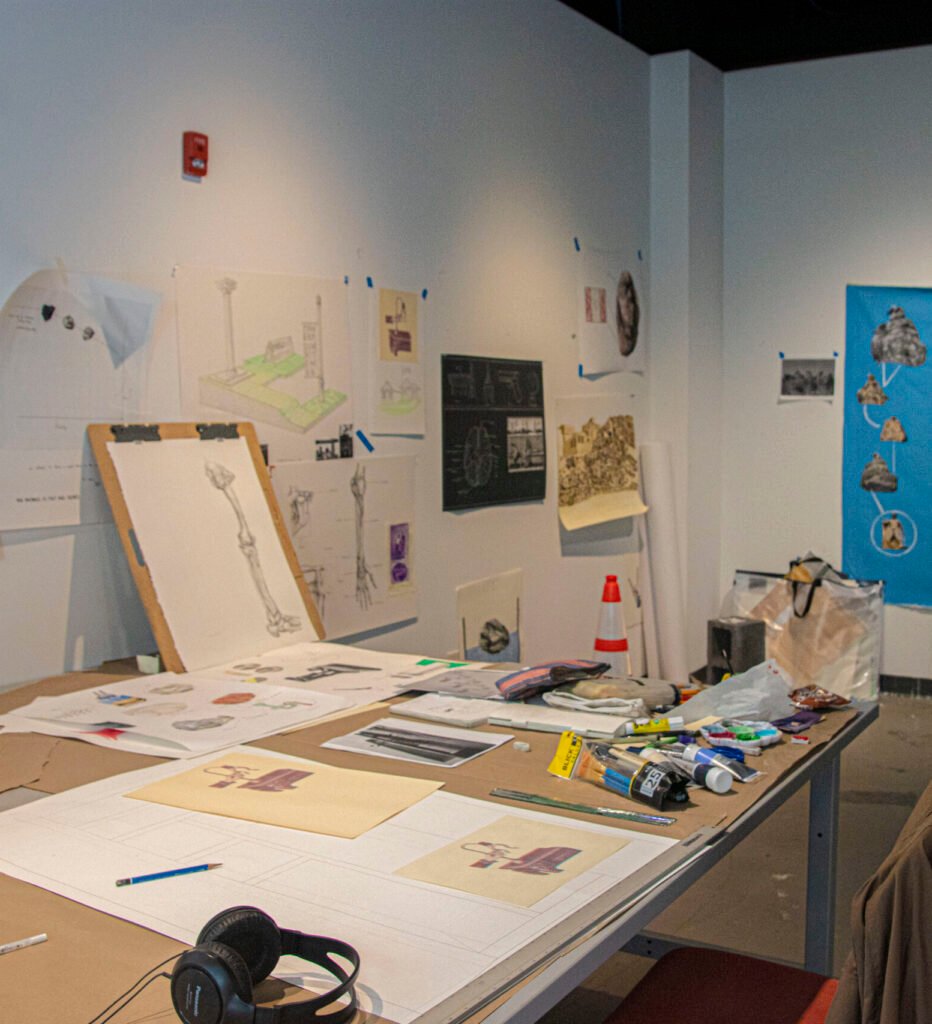
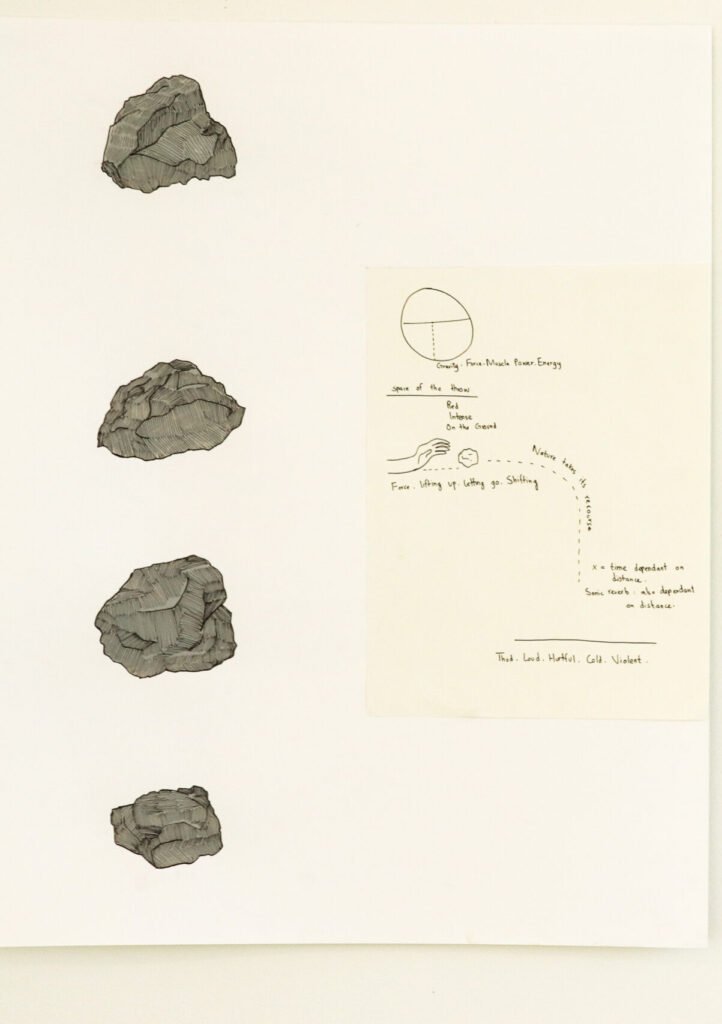
I think I have trained myself to develop a very comfortable relationship with doubt and confusion. There is energy as long as there is a doubt. Also I think it is the diversity of mediums I practice in. I used to worry a lot about not being able to commit to one medium. I was trained as a painter, and the methods of arriving at a resolved image still remain foundational to how I am thinking in the studio, but the identification with a single medium has always felt too rigid and hierarchical to me. Over time I have developed a trust in the explosive nature of my process, which is literally to explode in all possible directions at the same time. I am working on drawings, prints and films simultaneously, letting the different mediums and their conceptual volume bounce back on one another. But there is consistency as well. I spend a lot of time on my drawings. Drawing has always been the bedrock for me and I am still learning the balance between drawing for myself and for an audience. Over time, I have also noticed that seriality is becoming more important to me. I enjoy working in a series. This is an inner logic to each body of work I have made.
What are you currently consuming outside of the art world that has been finding its way into your work?
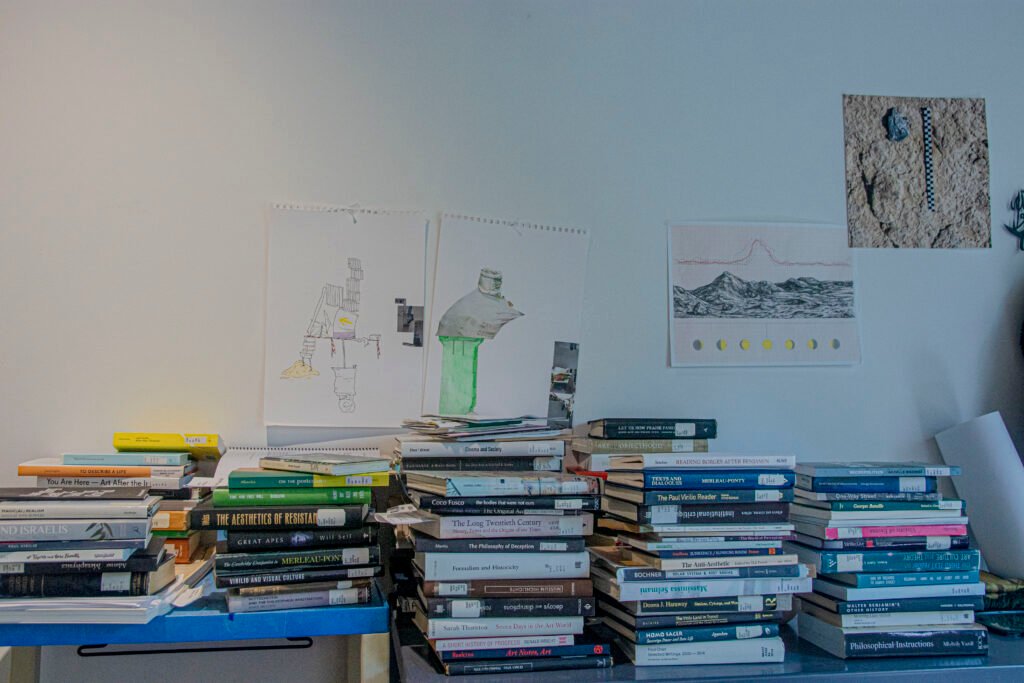
I read multiple things at the same time. It’s impossible to point out any singular origins of my interests. I have been very interested in thinking about how we understand our relationship to the history of digital technology. I am currently reading Allan Sekula’s Art isn’t fair, and Achille Mbembe’s Necropolitics. I am fascinated by the way that Allan Sekula charts this lineage of technical realism and capitalism from a 16th century illustrated text on mining, to the plates of mineralogy in the 18th century, to the mining photography of the 19th and 20th century. There are very direct and apparent material relationships between the socialized form of thinking in capitalist societies which tend to not account for the ways that digital technologies are children of colonial technologies. I am thinking a lot about Bertillionage, which was an early scientific system of biometric identification based on the details of facial features, an approach which was very close to Francis Galton’s eugenics. This is a direct ancestor to modern AI policing and racial profiling through facial recognition.
Your work engages with folklore, storytelling and history alongside technologies like open-source neural networks. What happens when something deeply rooted in collective memory encounters a technology that has no lived memory of its own?
I think I am interested in complicating the linearity of time and subjective experience. For example I did this project about the Moon Landing in 2023 which was based on an oral folklore I had heard as a child growing up in Dhokri, which is a village in Punjab where I grew up. The story was that when the first man stepped foot on the moon, he heard the Adhan there. I am fascinated by the human ability to craft our own truths to believe in, rather than having blind faith in universalizing narratives, specially the ones like the moon landing which is quintessential to the dream of American progress and technoscientific superiority.
Modernity is the work of construction of an ideal human, ideal citizen, that believes in the promise of progress by means of imperial domination. I keep returning to mythology, and oral folklore here as a counter force to this. The world of data and algorithms is purely calculable. It doesn’t exist without quantification, and scientific studies of humans and nature. The problem of AI didn’t begin in this century; the leg work was done in the enlightenment era with the standardization of human life. I use neural networks, open source AI’s to perform a subversive act. The world was modeled in a way that has enabled such technologies of extraction to exist in the first place. For me, the interest is always to show the nature of the calculable, the standardized along with the dynamic, unpredictable nature of mythology, which is inherently incalculable. A lot of my work attempts to bring such two polar opposites together.
Having studied at NCA and now pursuing an MFA at Carnegie Mellon, what are the biggest differences you’ve experienced between art education in Pakistan and the US? Has moving between the two changed the way you think about what art education should be?
I am lucky to be surrounded by some very good mentors and talented classmates, both in NCA, and at Carnegie Mellon. My education at NCA followed a very rigorous, but traditional approach to art education. It helped me develop a strong studio ethic, where work is the only rule. I had some really smart mentors at NCA who I decided to trust. They helped me understand how theory, ideas and practice all go hand in hand. In my second and third years, I took a theory class that wasn’t structured around any single tradition in art history. Instead, it traced the history of ideas and the history of thought more broadly. Understanding how to carry those ideas from theory into studio practice was essential. That training really prepared me for the open-ended nature of grad school where I am now. I am lucky to have a truly interdisciplinary environment here at Carnegie Mellon. CMU is a large research university, and here I have taken classes in the Physics department, school of music and history and so on.
I truly believe that the biggest gift that art education has given me is not technical skills or theory, but rather it has molded an attitude, or modeled a behaviour. Which is basically simple, it helped me learn what it means to simply witness, imagine, ask and make. Art education has helped me really have faith in my own thinking and process. And that also comes from having really good mentors and fellow peers over the years. No one does it alone.
What has distance from Pakistan made more visible to you; about home, identity, or the place itself?
I want to quote one of my intellectual heroes here, that is Stuart Hall. He argues that all identities are based on race, ethnicity and nation – the fateful triangle. One is understood on the terms of the other, you can’t separate them. My artistic orientation is deeply informed by my Pakistani heritage, but it is not reflected through symbolism, but rather through methods. I mentioned subversion earlier. Subversion and resistance deeply informs the question of form in my work. So much of the way that the word, ‘identity’ operates in art is according to a very reductive and confessional logic, where experiences of artists of south Asia and of other origins, get demonstrated for the benefit of the institutional world. It becomes an evidence of their own inclusion in the art world. I am always looking for forms in my work that do not produce an othering dynamic, or an ‘us versus them’ dynamic. I think today’s world has such complicated flows of migratory movement that one has to let a formulation of identity emerge that goes beyond the nation state or at least complicates it. (and in our case, the nation state that was carved out of a colonial venture).
Art institutions are themselves structures of power, yet artists often depend on them for education, resources, visibility and legitimacy. How much can those structures actually be challenged from within, and what responsibility does an artist have in all this?
I think my idea of the art world as a monolith structure has changed for the better. In many ways it is a monolith, and in many ways it is not. Politics and affect cannot all be done and resolved on the gallery wall, but I deeply believe that a work of art is always imbued with power, both the structural power and the power to signify. I think the individual artist has the responsibility to resist the essentialization of bodies and identities. The space for global contemporary art is never neutral ground for expression. Museums emerged at the end of the eighteenth century, and were created around the world to aid the European colonialism which made representation both of Western rationality and its domination over Oriental or “primitive” societies important, this appropriation of foreign artifacts could then be used both as a tool for national building and as a proof of racial and national superiority. Recognizing this history does not mean rejecting the museum outright, but it does mean approaching its spaces with a critical eye. I think it is essential to produce new visual vocabularies and methodologies that speak to this power rather than reproducing the structures of power. I prefer art that is not afraid of taking a position, but it must be formally accomplished, complex and thoughtful. This is the kind of art I respect and learn from, but that doesn’t mean that I only enjoy or make overtly political art. There are many ways to be political and numerous more to be critical. For myself, humor is perhaps the most important tool when confronting grim political realities.