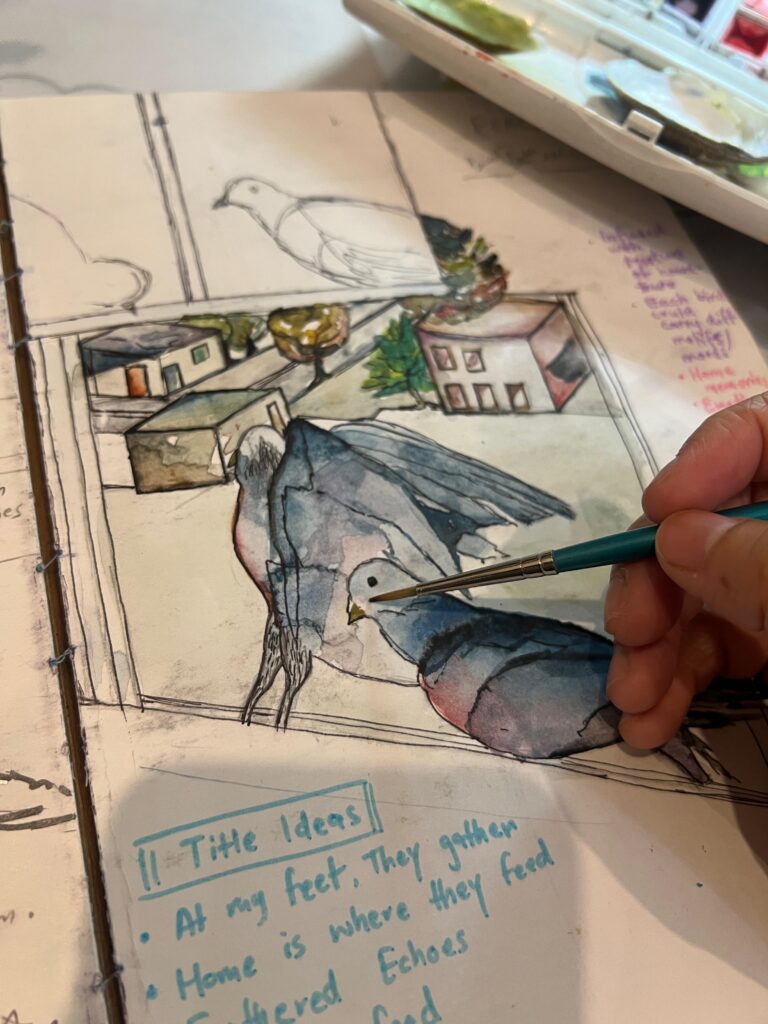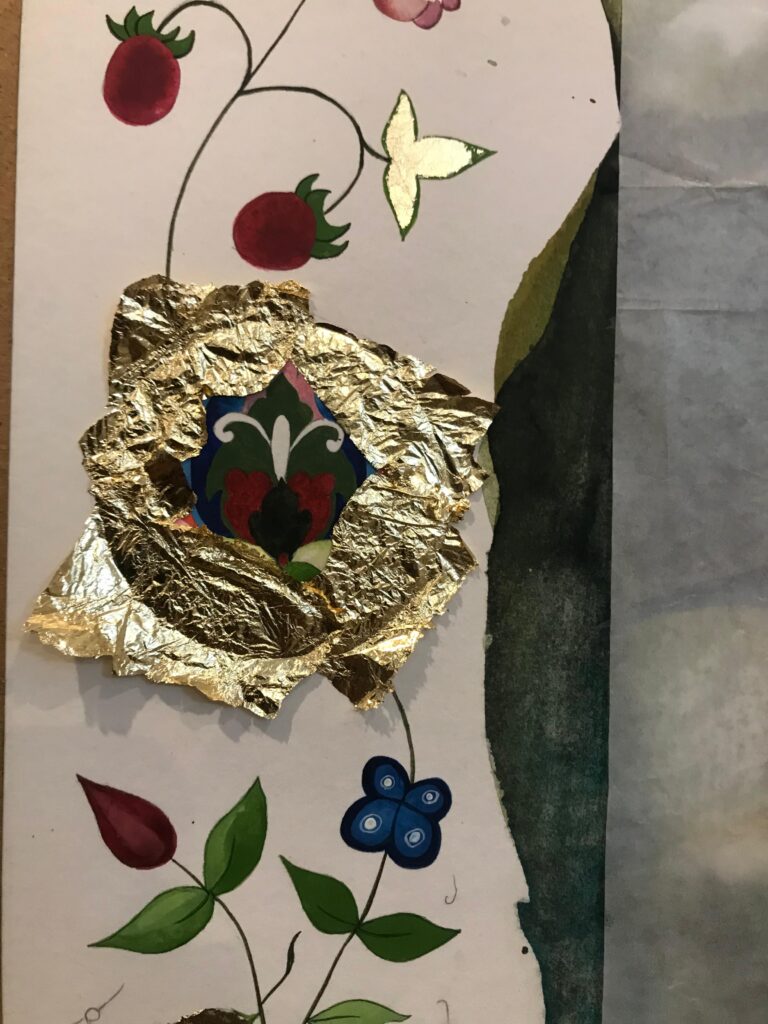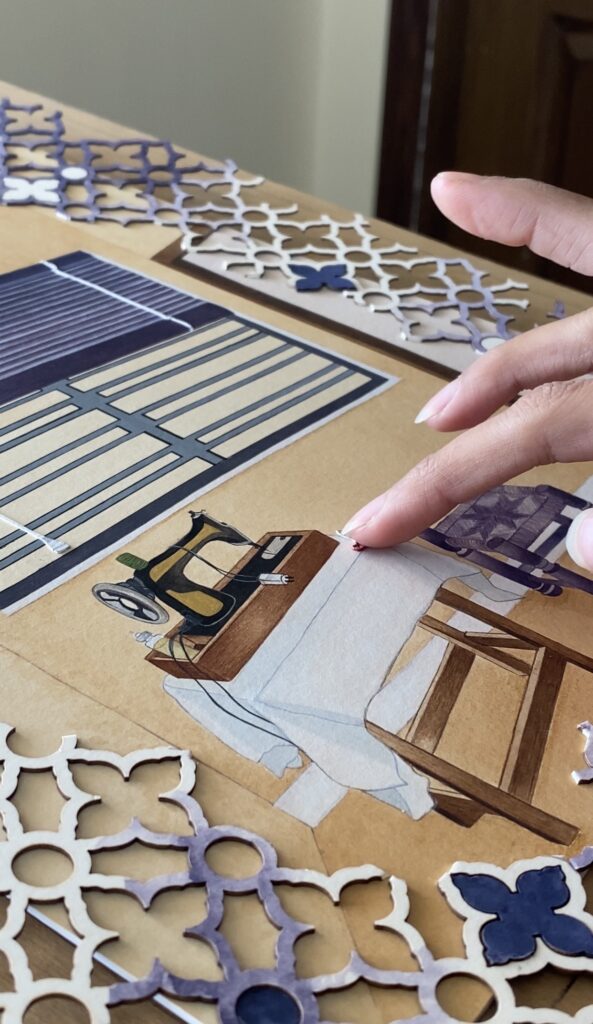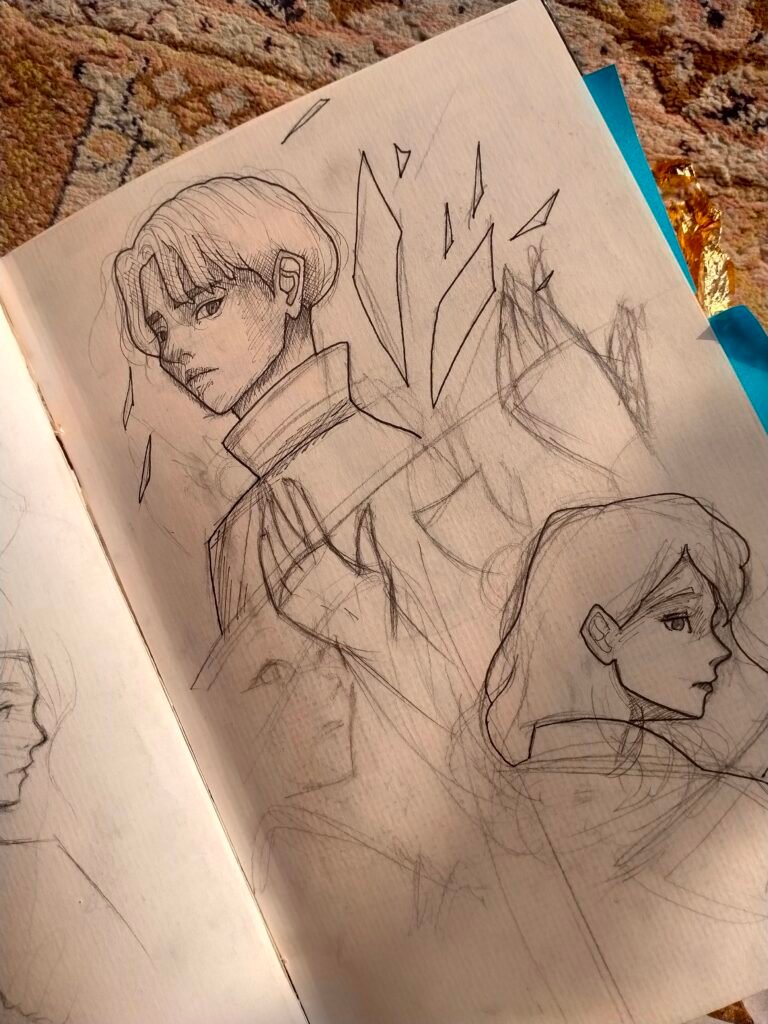
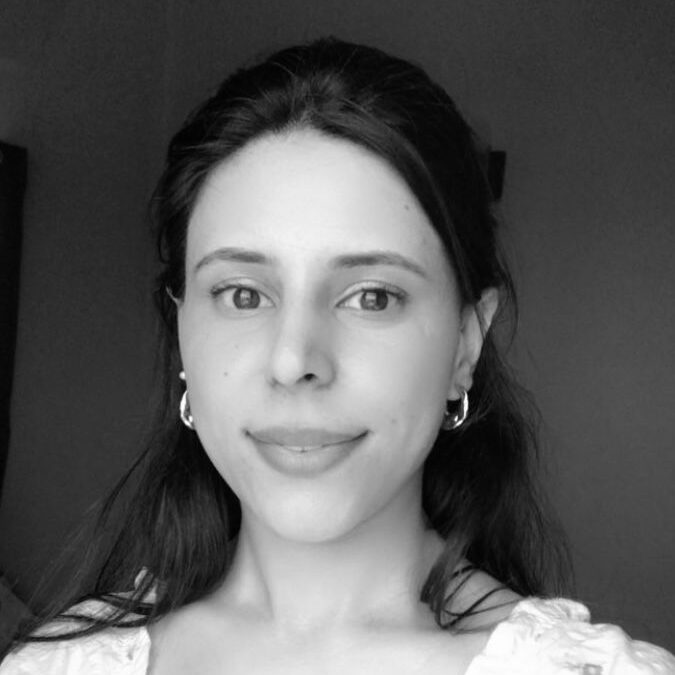
Rabiya is a visual artist from Azad Kashmir based in Islamabad. She graduated in 2021 with a BFA in Fine Arts from the University of Gujrat. Her practice began with landscapes, exploring how surroundings shape emotional and empathetic selves. Rooted in her hometown’s serene valley, her work draws on mountains, greenery, stones, and pigeons as symbols of comfort and belonging.
Notes on Moving, nature, & observation
The way light, air, and motion transform the same scene throughout the day creating new perspectives, quietly shapes how I see and work.
You’re closely connected to your hometown and its natural surroundings, but you’re now based in a different city — how has that shift shaped your work and your studio routine?
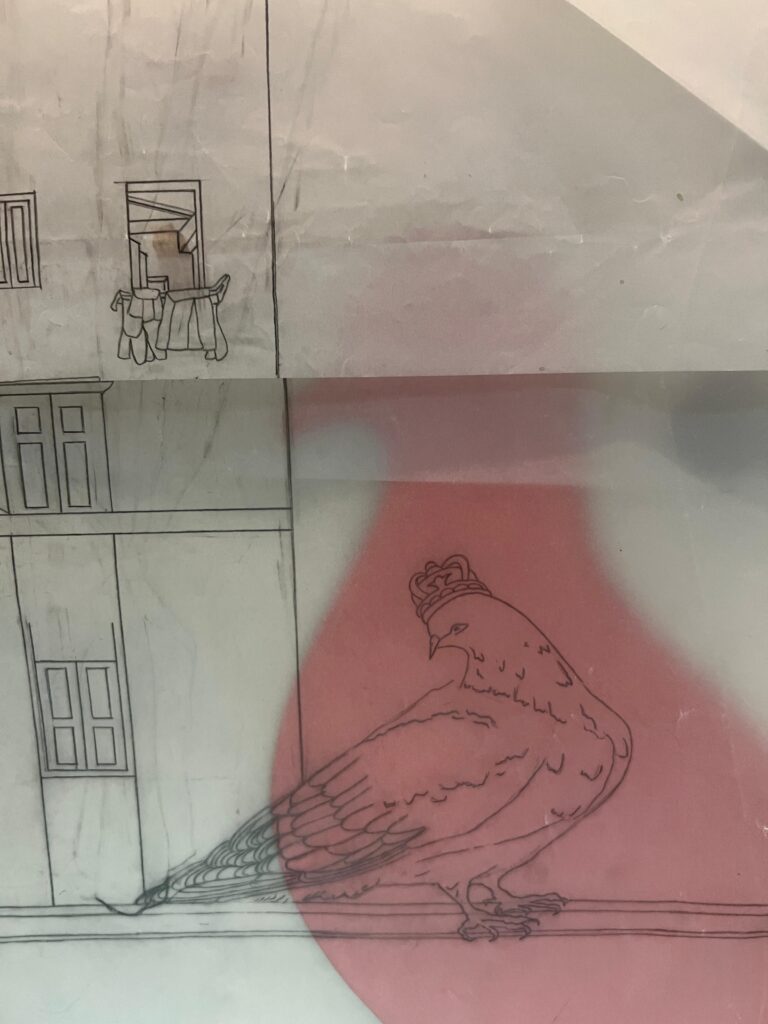
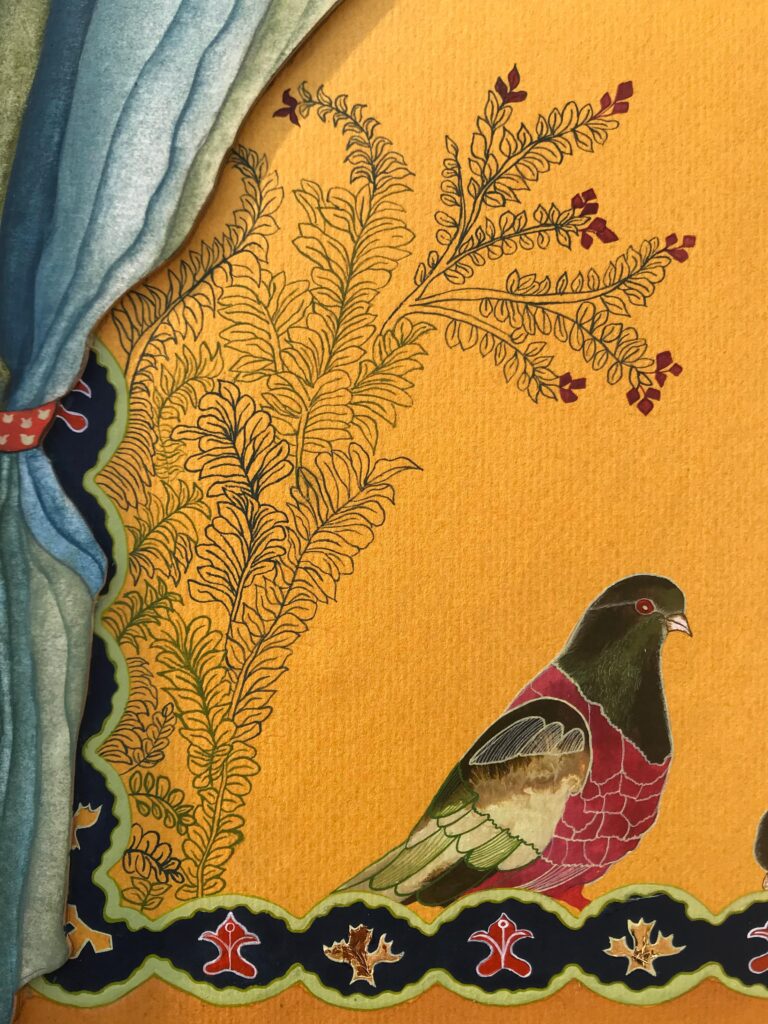
Moving from my hometown to the city has reshaped my way of seeing. My earlier work grew out of long observation of familiar landscapes, carrying a sense of peace, stillness, and layered complexity. Meanwhile in the city, my focus has become more intimate and centered on pigeons at my windowsill and terrace. Through these encounters, I continue to explore calm, coexistence, and life’s quiet complexities, translating the essence of my landscape practice into a new environment. In that sense, the move hasn’t broken continuity in my practice, it has reframed it.
How has your new space impacted your materials, forms, or ways of observing?
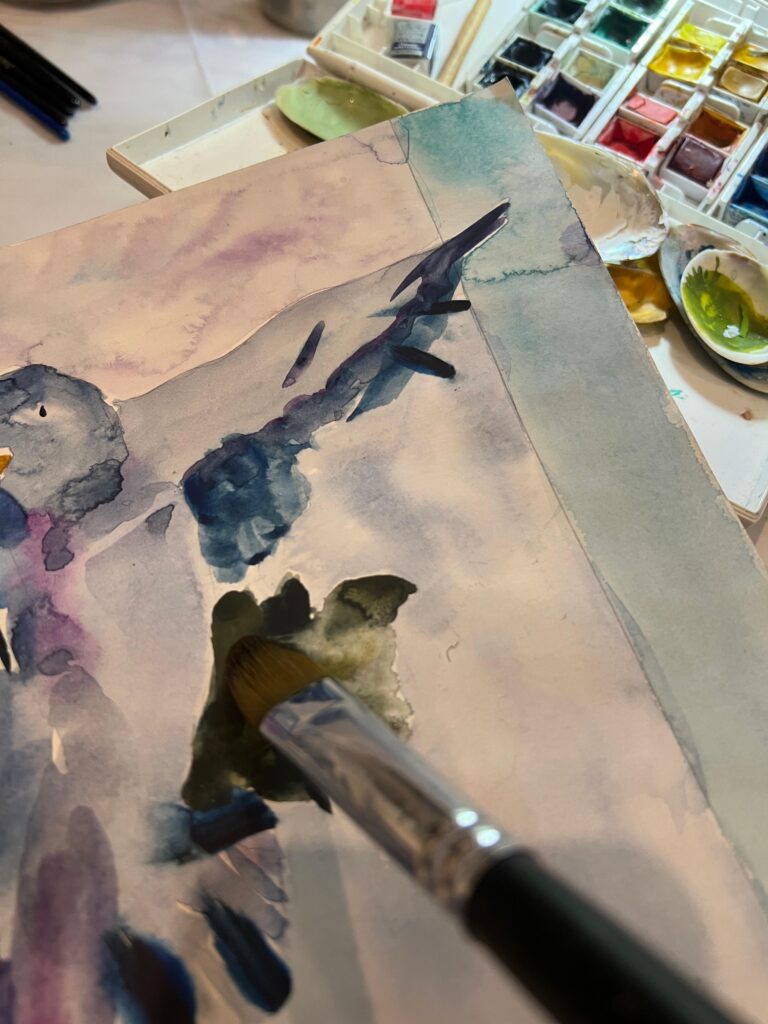
The new space has made my practice more immediate and responsive. In my hometown, vast fields offer a single, expansive view to observe, whereas the city compresses space where one frame holds many small, overlapping, and seemingly random details. This shift has changed how I observe, moving from prolonged, uninterrupted looking to layered, fragmented attention. It has influenced my forms to become more intimate and focused, and my materials and processes to respond to a more contained studio practice. Within this capacity, I still try to find moments of calm and depth by looking closely and being attentive.
What overlooked or easily ignored aspects of nature tend to find their way into your thinking or work?
I’m often drawn to aspects of nature that exist quietly alongside us and are easy to overlook elements that don’t demand attention but persist through presence. Things like habitual movements, pauses, or small acts of coexistence tend to enter my thinking. In my current context, the pigeon has become a way to engage with this idea. A familiar, often ignored presence that carries its own rhythms and complexity. Through focusing on such understated forms of life, my work reflects an interest in noticing calm, continuity, and subtle narratives within the everyday.
Do pigeons feel like a fragment of home or identity for you — and if so, why?
Yes, they do feel like a fragment of home and identity for me. Pigeons carry a sense of familiarity and continuity they exist across both rural and urban spaces, quietly adapting while remaining largely the same. In the city, they offer a connection to the slower, observational way of seeing that shaped my relationship with my hometown landscape. Their presence allows me to hold onto a feeling of rootedness while navigating a new environment, making them a quiet bridge between where I come from and where I am now.
Beyond pigeons, are there elements of nature that quietly shape how you grow or think as an artist?
Beyond pigeons, I’m influenced by the subtle rhythms of nature, like the gentle changes and movements and variations that occur in a place over time. The way light, air, and motion transform the same scene throughout the day creating new perspectives, quietly shapes how I see and work. These nuances don’t just guide my observation, but help me grow as an artist by making me patient and attentive, reminding me that meaning often emerges in small shifts rather than in a dramatic way.
Do you ever see aspects of yourself reflected in how pigeons move, adapt, or exist within urban space?
Yes, I do see aspects of myself reflected in pigeons, especially in the way they adapt and exist within the urban environment. They navigate crowded, ever‑changing spaces with quiet resilience, finding moments of rest and belonging within chaos. In that sense, their presence mirrors my own experience of adjusting to the city, learning to observe closely to slow down within movement, and to create a sense of continuity in a place that is constantly shifting. Their ability to remain grounded while adapting to new surroundings resonates deeply with how I position myself and my practice in an urban setting.
If you were a pigeon for a day, how do you think you’d move through the day?
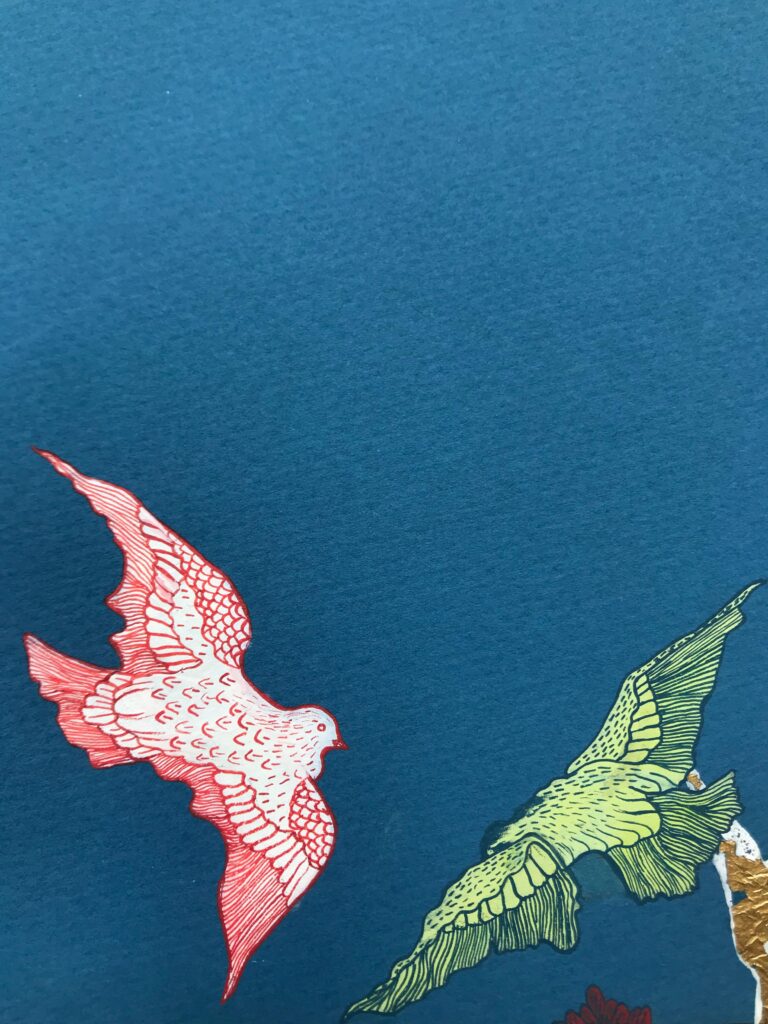
If I were a pigeon for a day, I think I’d move slowly and attentively, observing more than rushing. I’d spend time pausing, watching from ledges and rooftops, adapting to whatever the day offers. I imagine drifting between movement and stillness, finding small moments of calm within the city’s constant flow. At times, I’d fly freely, just to let go of the weight of the world, the pressures, and the things that disturb or overwhelm us. Simply being present and responsive to my surroundings would be more than enough.
What are you observing most closely these days, in your surroundings or in yourself?
These days, I’m observing small, quiet shifts both around me and within myself. In my surroundings, I notice everyday movements, pauses, and repetitions that often go unnoticed, and how familiar spaces subtly change over time. Internally, I’m noticing both patience and haste, how some things unfold slowly while others rush by. Paying attention to this balance between calm and urgency is shaping my practice, helping me respond more sensitively to my environment and to my own evolution as an artist.